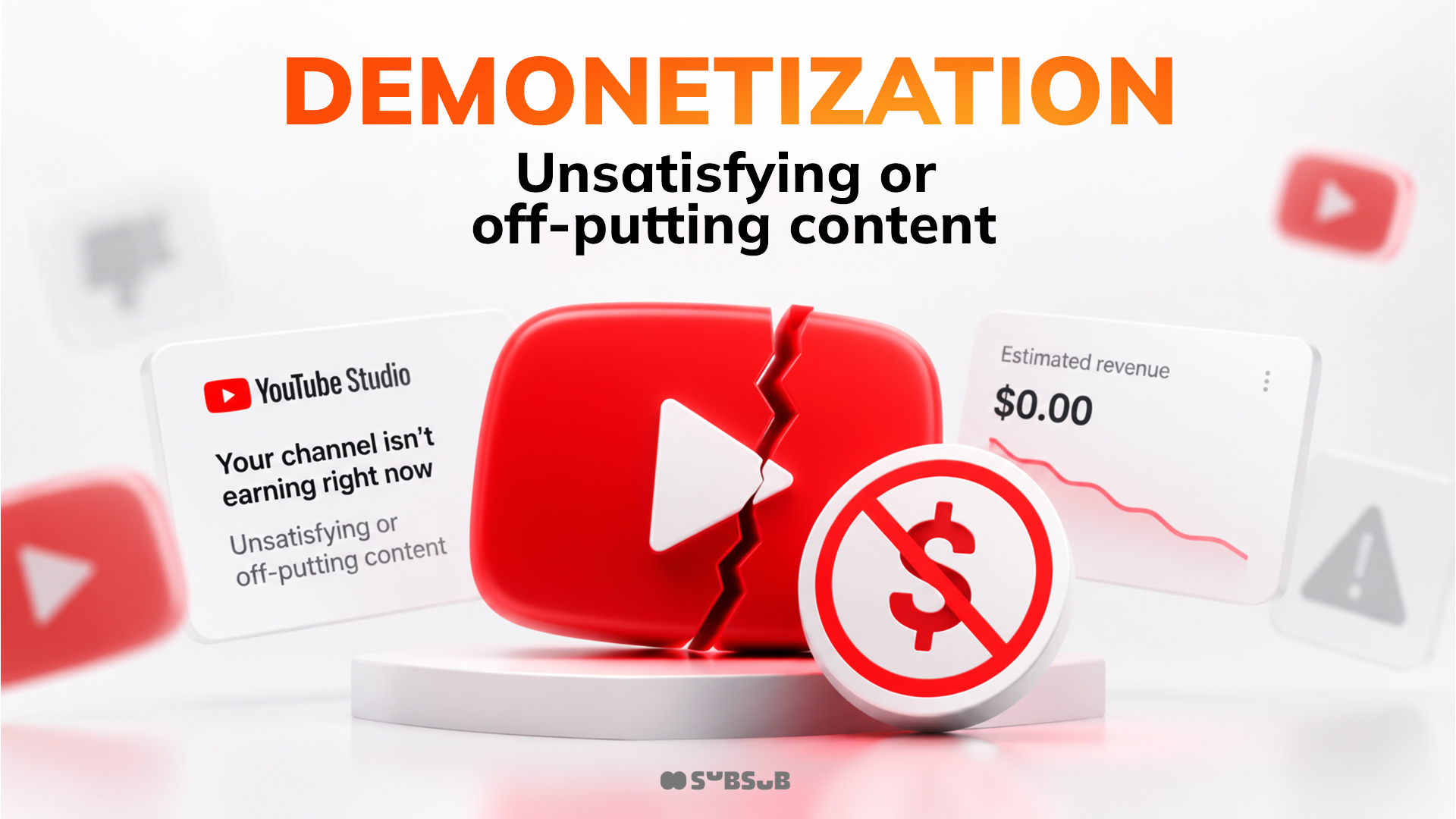
“People are watching it” no longer means “YouTube considers it quality content.”
YouTube has significantly tightened its monetization requirements and increased its focus on content authenticity. The main reason is the rapid growth of AI-generated content, formulaic formats, and mass-produced videos.
As a result, many channels have lost monetization or been subjected to additional reviews. This has sparked a major discussion: what exactly does YouTube consider inauthentic content, and why do some AI-powered channels get monetized while others do not?
What Is “Inauthentic Content”
YouTube does not provide a single formal definition of inauthentic content. In practice, however, the term generally applies to videos created with minimal creator involvement and clear signs of mass production.
Common examples include:
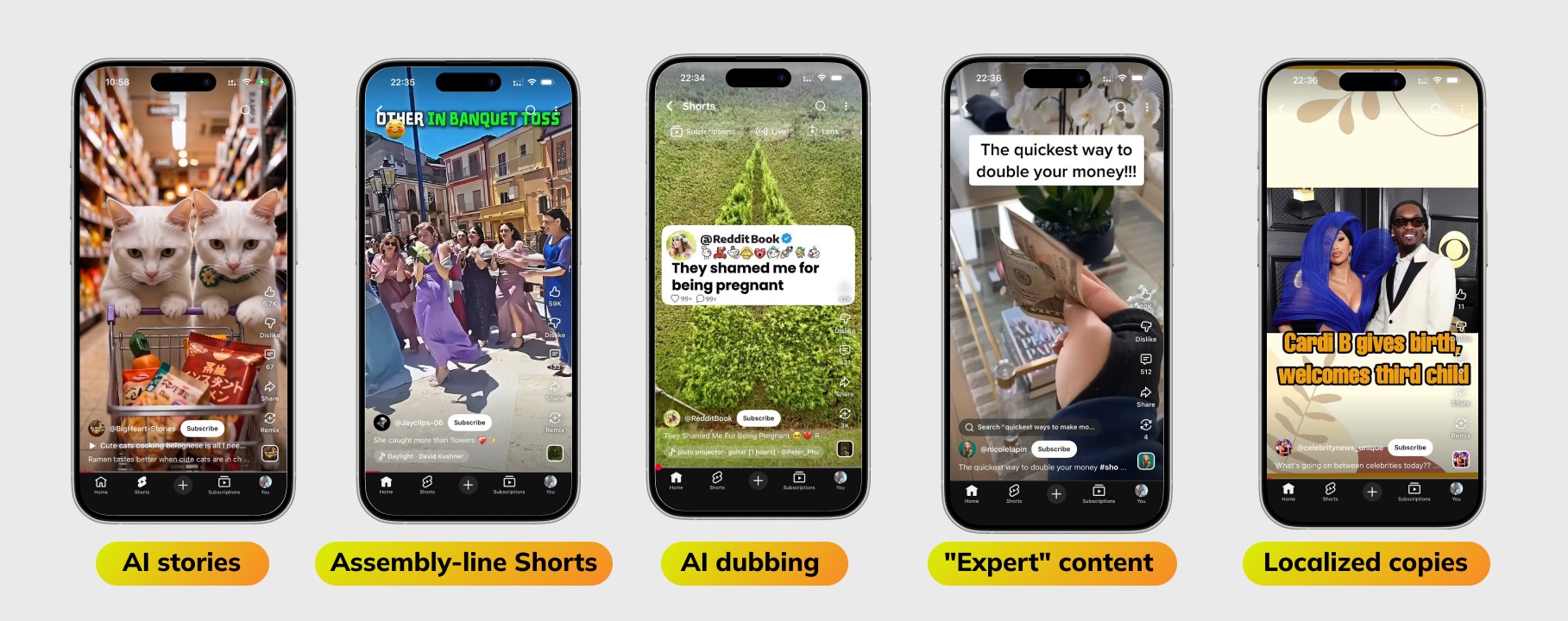
Template-based scripts and repetitive video structures;
Identical editing styles and presentation formats;
AI voiceovers without creator interpretation or input;
Stock footage or automatically selected visuals;
Content fully generated by AI, from script to final video.
Creating videos used to require time, skills, and often a team. Today, much of the process can be automated within hours. This has created three major challenges:
Recommendation feeds have become less diverse;
Viewers burn out faster from repetitive content;
Advertisers do not want their brands associated with low-quality or fully automated videos.
Since advertising remains YouTube’s primary source of revenue, the platform has started enforcing stricter quality standards for both content and creators.
Types of Channels Most Commonly Affected by Demonetization
AI Channels With No Creator Involvement
When scripting, voiceovers, editing, and visuals are all automated, AI becomes the primary production tool. The issue arises when AI completely replaces the creator.
Mass Content Localization
These are channels that translate or dub popular videos into other languages without meaningful adaptation. Problems arise when:
There are no rights to the original content;
The translation is not adapted for the new audience;
The localized version essentially copies the original channel.
Localization itself does not violate YouTube policies. In fact, YouTube actively supports multilingual content and international audiences.
Large volumes of short videos are published in the same format. Risk increases when:
Videos are nearly identical;
Content is published at extremely high frequency;
The videos provide little value to viewers.
Reddit Channels
Reddit stories paired with AI voiceovers, subtitles, and stock footage. This format was highly scalable for a long time, but since 2025, such channels have increasingly faced demonetization due to repetitive or inauthentic content.
Fictional Story Channels
Invented conflicts, fabricated stories, clickbait titles, and misleading thumbnails. These channels may lose monetization for misleading viewers.
“Educational” Channels Without Expertise
Formats that appear educational but are essentially automated compilations of information. The issue is that this type of content often simply rephrases existing information without adding original analysis, expertise, or perspective.
True Crime
Fictional crime stories presented as real events. These often consist of AI-generated narratives and fake “documentary” videos following the same structure: a mysterious disappearance, a shocking discovery, or a long-hidden secret.
Examples:
“A Family Disappeared During a Road Trip - Eight Years Later, a Strange Recording Was Found”
“Fishermen Vanished at Sea - Years Later, Their Boat Was Discovered Near a Deserted Island”
AI Music Channels
Music channels where all content is created by AI: music generated through SUNO and visuals or cover art generated by AI tools.
And there are dozens of other channel types where everything looks the same and the actual creator is AI.
Why Some AI Channels Get Monetized While Others Do Not
YouTube does not evaluate the use of AI itself-it evaluates the final result. A channel can use AI and remain monetized if, during a review, the creator can demonstrate meaningful involvement in the production process through materials such as:
Source materials (voice recordings, raw footage, video assets);
Production documentation (script revisions, edits, content plans).
The key question for YouTube is simple: Is there a creator behind this content, even if they never appear on camera?
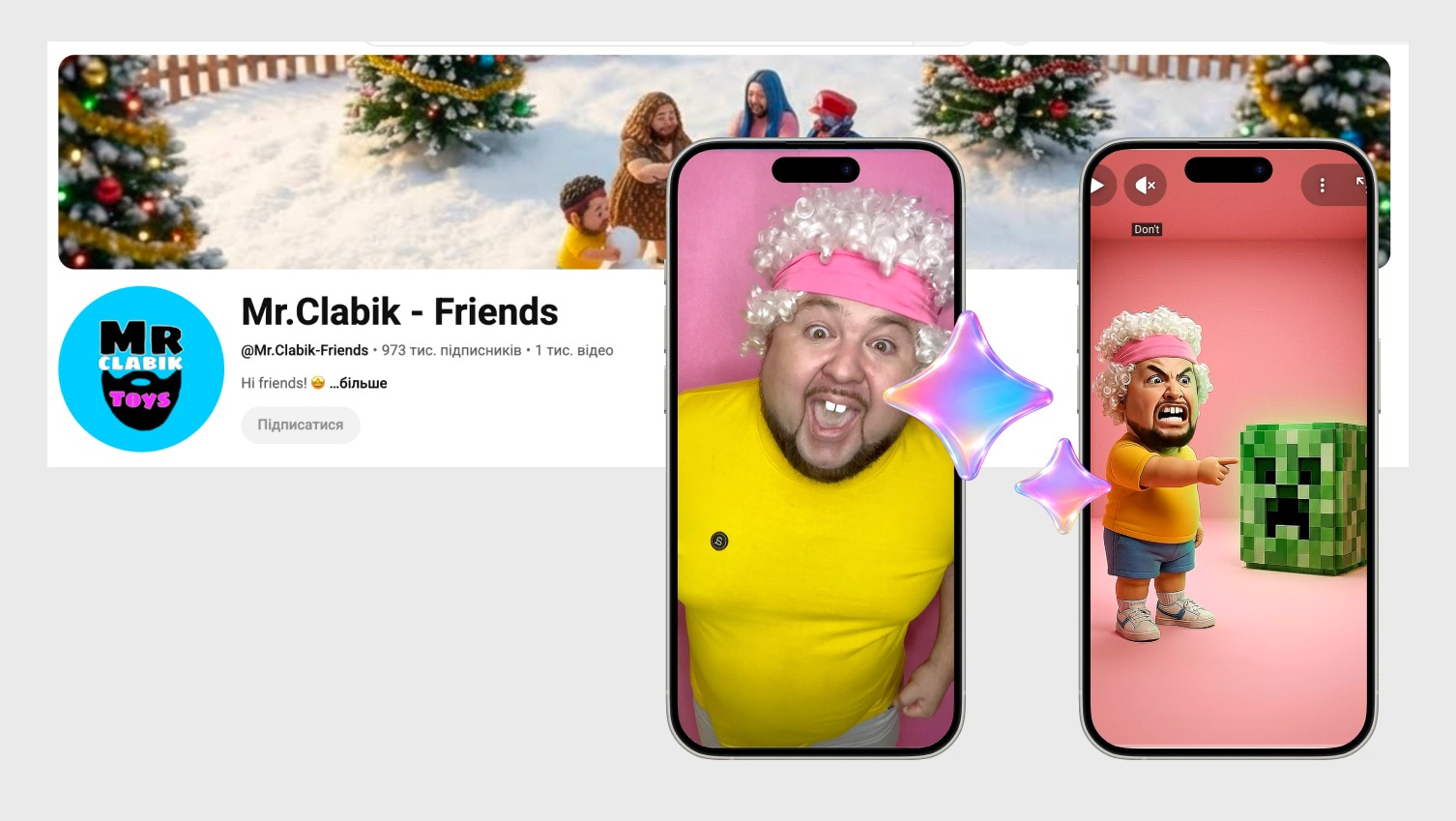
A good example is MrClabik-Friends. The creator uses an AI-animated version of themselves while remaining actively involved in content creation.
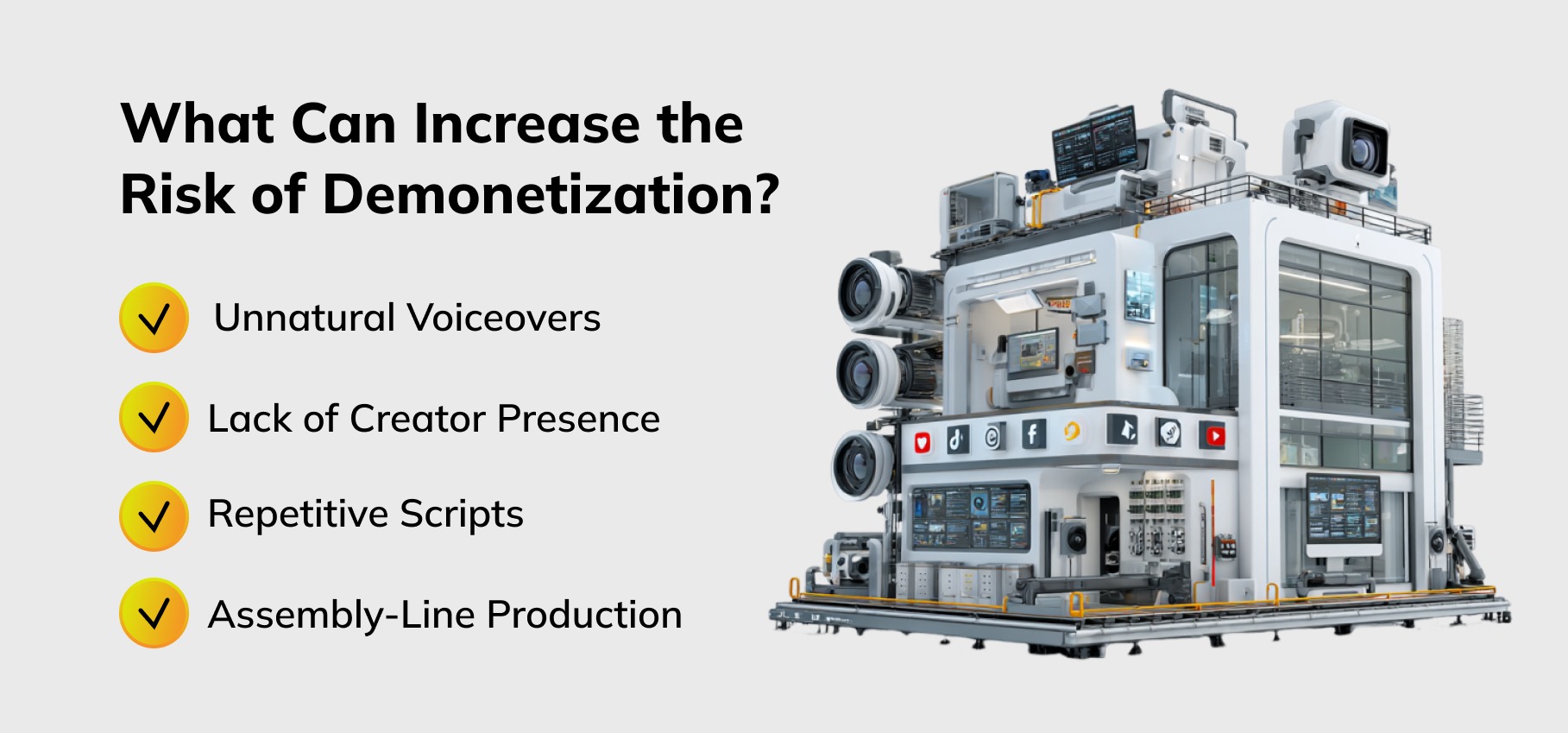
What Can Increase the Risk of Demonetization
YouTube does not publish a complete list of criteria. However, over the past six months, several recurring patterns have consistently appeared among channels that lost monetization or underwent additional reviews.
Repetitive Scripts
If videos follow the same structure repeatedly, algorithms may classify the channel as formulaic-especially when only the topic changes while the presentation remains identical. To check for repetitive patterns in your videos, register an account at https://app.subsub.io/login and contact @subsub_admin on Telegram to gain access to the video transcription tool.
Unnatural Voiceovers
Standard voices from the free tier of ElevenLabs or other widely used voice libraries may carry additional risk. There are reasons to believe YouTube analyzes audio not only at a perceptual level but also through technical signal characteristics. A safer approach is using your own cloned voice or a unique voiceover that does not appear across multiple channels.
Lack of Creator Presence
On YouTube, being a creator does not necessarily mean appearing on camera. The platform looks for other signs of authorship, including:
A distinct communication and presentation style;
An editorial approach to topic selection;
Original interpretation and analysis;
A consistent tone of voice across videos;
Varied video structures instead of a single template;
Audience engagement (fan support platforms, comment replies, etc.).
Assembly-Line Production
Channels publishing dozens of short, nearly identical videos every day are more likely to attract algorithmic scrutiny. YouTube is becoming increasingly effective at identifying repetitive, serially produced content without requiring manual review.
Can a Channel Recover Monetization
Yes. Many channels successfully pass a re-review and regain monetization. However, this usually requires a systematic change in the content strategy.
An important detail: YouTube’s system is cumulative. The more yellow icons, warnings, and policy violations a channel accumulates, the more closely new content is examined. As a result, restoring monetization often requires not only improving individual videos but also improving the channel as a whole.
Practical Checklist: How to Protect Your Channel
This checklist can help reduce the risk of demonetization and prepare a channel for re-review.
1. Content
Reduce mass production and eliminate the “assembly-line” approach;
Add clear creator involvement to every video;
Avoid making every video look and feel exactly the same (structure, shots, clothing, etc.).
2. Scripts
Write in two stages: create your own draft first, then use AI for refinement and editing if needed;
Avoid generating entire scripts from scratch using AI alone;
Alternate long and short sentences to create a natural rhythm;
Avoid formulaic phrases and common AI-content clichés.
YouTube evaluates a channel as a complete system. If metadata appears formulaic, it may reinforce signals of mass production. Avoid:
Identical title structures across all videos;
Copying the same tags between videos;
Repetitive descriptions using the same keywords;
Similar thumbnails with unchanged layouts and composition.
4. Channel Branding
Update the About section with a clear description of the creator or team;
Add links to social media profiles;
Build a recognizable channel brand;
Publish Community posts that introduce the creator;
Create a channel trailer featuring the creator or a recognizable creator persona.
5. Monetization Compliance
Minimize warnings and Community Guidelines violations;
Review videos before publishing to reduce the risk of restrictions or strikes.
For a pre-publication video review, contact @subsub_admin on Telegram or email creators@subsub.cc.
Where YouTube Is Heading
No one knows exactly how YouTube’s policies will evolve or which strategies creators will adopt next.
What is clear is that YouTube is not moving toward banning artificial intelligence. On the contrary, the platform is actively integrating AI into its own tools. This means AI is already part of YouTube’s future. At the same time, YouTube is placing increasing emphasis on the creator as the central figure behind the content.
As a result, audience engagement tools-such as fan pages and communities-are becoming more important because they help creators build stronger direct relationships with viewers and maintain long-term audience interest.
There is also a certain irony in the possibility that some creators may gradually return to simpler and more authentic formats, similar to YouTube’s very first video, “Me at the Zoo” (2005), as a response to the platform becoming saturated with polished AI-generated content.