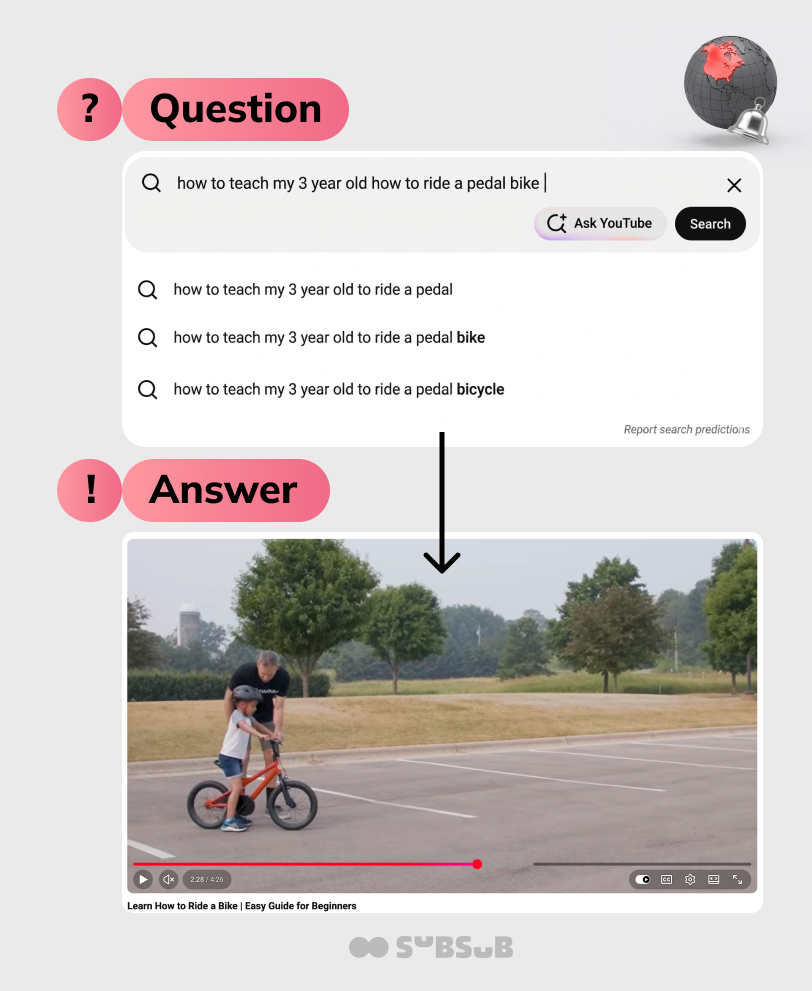
YouTube search no longer works the way you're used to. In May 2026, Google introduced Ask YouTube - a system that transforms the search bar into a fully-fledged AI assistant. Instead of typing short queries like "how to paint a wall," users now ask detailed questions such as: "How do I paint a wall in a child's bedroom if it's already covered with oil-based paint and I don't want to remove the old layer?" and tune the search output with the help of additional context.
In this guide, we'll break down how YouTube SEO works in 2026 and what you need to do to ensure your videos get discovered.
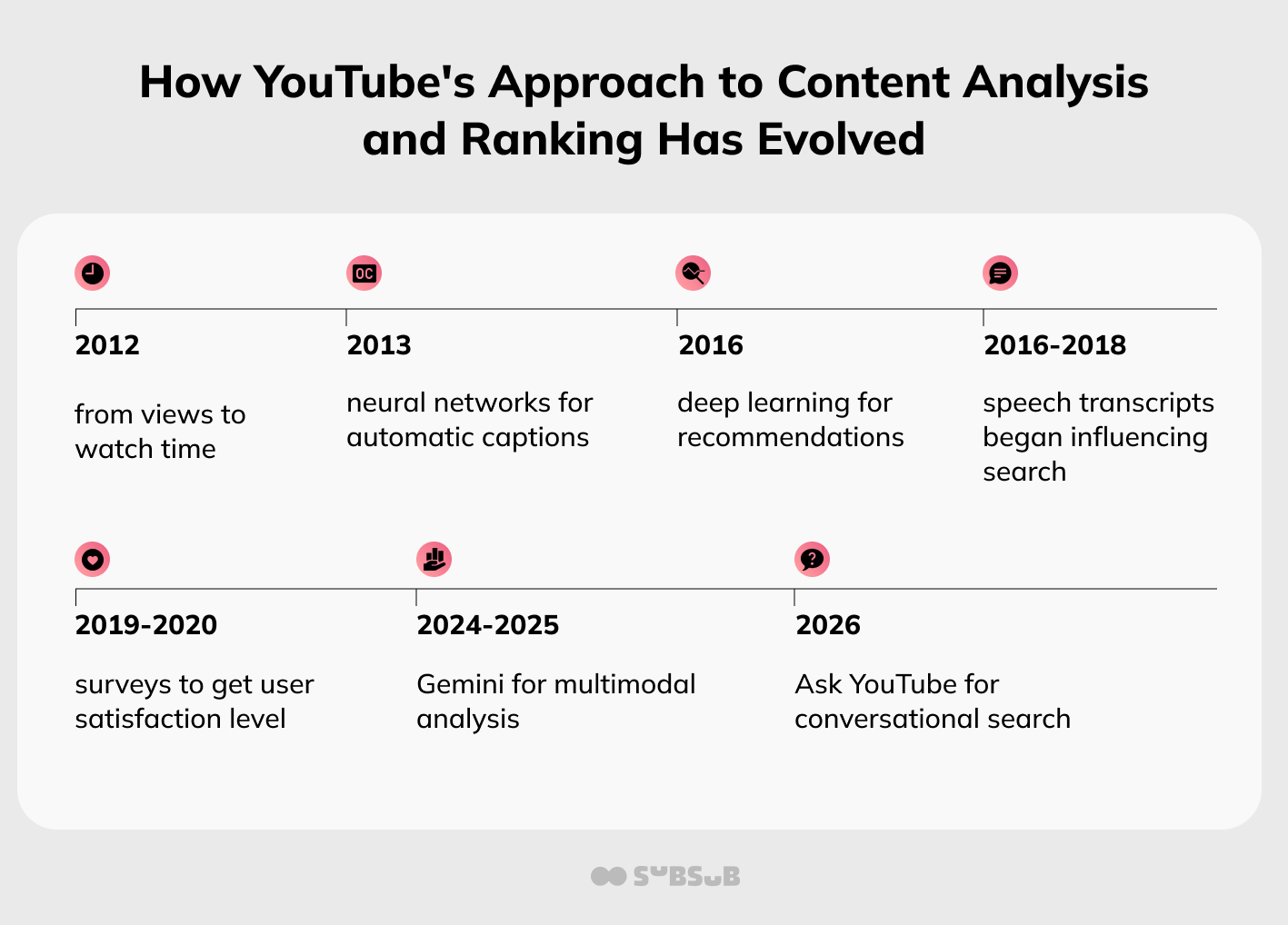
How YouTube's Approach to Content Analysis and Ranking Has Evolved
The platform began using deep learning for recommendations back in 2016. Around the same time, speech transcripts started influencing search rankings. However, in practice, ranking still relied primarily on metadata and behavioral signals.
Between 2025 and 2026, a major leap occurred. Gemini integration gave YouTube the ability to analyze videos multimodally - much like a human would:
Frame-by-frame visual analysis - the algorithm "sees" what's happening on screen and matches it to user intent.
Speech recognition - everything you say in a video is indexed and factored into ranking decisions. Spoken keywords now carry more weight than keywords written in descriptions.
Usefulness evaluation - the system determines how effectively a video answers a question.
Satisfaction signals - instead of focusing solely on raw watch time, YouTube evaluates whether viewers were satisfied. Did they watch until the end? Return to the channel? Or leave after 30 seconds to continue searching?
YouTube also considers device context. Smart TV users are more likely to see long-form content, while mobile users are shown Shorts and shorter videos. The same video may receive different levels of distribution depending on the devices your audience uses. If your audience is primarily mobile, concise and well-structured shorts will have an advantage.
Ask YouTube: What It Means for Creators
Ask YouTube is a conversational search experience launched at Google I/O 2026. Initially available to Premium users in the United States, it's expected to roll out broadly in the near future.
Here's how it works:
A user asks a question in natural language, such as: "How can I teach a three-year-old to ride a bicycle if they already know how to use a balance bike?"
The system generates a structured response:
A concise AI-generated summary.
A selection of videos (both Long-form and Shorts) accompanied by explanations showing how each video answers the question.
Timestamp navigation - instead of making users watch an entire 20-minute tutorial, Ask YouTube can direct them to the exact segment that answers their question.
Follow-up questions - users can continue the conversation, and the system remembers previous context.
How Will This Affect Traffic?
Search is poised to become a much stronger traffic source on YouTube.
Today, approximately 70% of watch time comes from recommendations (Browse and Suggested), while search accounts for roughly 15–25% of views for the average channel. With Ask YouTube, that balance is likely to shift as users increasingly bring the same informational queries to YouTube that they previously entered into Google Search.
Ranking will increasingly be determined by content quality and relevance. The more accurately your video answers a user's question, the higher it will rank.
Creators targeting English-speaking audiences should pay particularly close attention. English-language markets will experience these changes first and gain access to new features sooner than other regions. Early adopters will gain a competitive advantage that can later be easily applied to other language markets.
AI Content and Ask YouTube: Why the Content Factory Model No Longer Works
In January 2026, YouTube removed 16 well-known channels that collectively generated 4.7 billion lifetime views and more than 35 million subscribers. Thousands of faceless AI channels lost monetization due to what YouTube described as "inauthentic and mass-produced content."
How did we get here?
AI made it possible to create acceptable-quality content at scale. AI-generated soap operas, funny animal videos, and ambient compilations initially attracted audiences because they felt novel. But novelty fades, and repetitive content remains repetitive. Viewers don't gain value from watching the fifth version of the same video.
When evaluating channels for monetization, YouTube looks at the channel as a whole system. Repetitive formats, a lack of original commentary, and an absence of creator perspective all contribute to recognizable patterns.
YouTube does not prohibit AI. What it restricts is low-value content that lacks original thought and relies entirely on artificial generation. Ask YouTube reinforces this trend because it analyzes the substance of videos and can identify repetitive patterns during content analysis.
AI is an excellent production tool, but the thinking must be yours - the video should deliver real value, not just fill the feed.
Content-Level SEO: How to Create Videos That Get Found in the Ask YouTube Era
1. Say Your Keywords Out Loud
YouTube transcribes everything you say.
If your video is about "YouTube channel monetization in 2026," say that phrase naturally within the video. Repeat it in different ways as part of the discussion.
A strong opening might sound like this: "Today we're going to break down YouTube channel monetization in 2026-what has changed, what the current requirements are, and what to do if your channel hasn't yet joined the Partner Program."
Pay special attention to the first minute.
The algorithm closely evaluates the first 60 seconds. If viewers leave early, YouTube interprets that as a failure to meet expectations, making the video less likely to appear in Ask YouTube results. So don't waste the first minute on long intros or animated logos.
2. Structure Videos as Answers
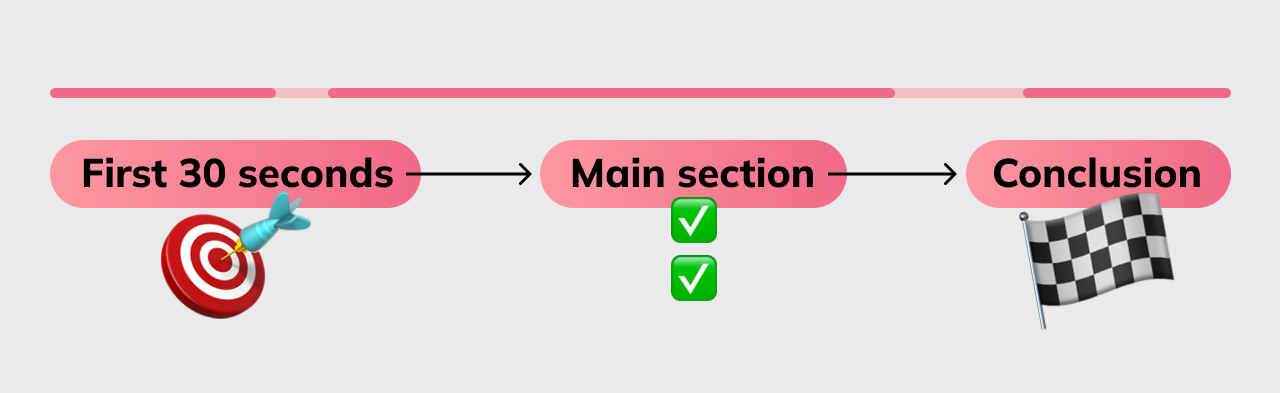
Ask YouTube favors videos that provide direct answers. The most effective structure is: Problem → Solution → Result
First 30 seconds - clearly define the problem. "In this video, I'll show you how to set up YouTube ad targeting if your budget is less than $100 per day."
Main section - present a sequence of actionable steps.
Conclusion - summarize the key takeaway.
This structure benefits both viewers and AI systems by creating clear entry points and extractable segments that can be surfaced in response to specific questions.
3. Use Chapters (Timestamps)
Chapters are one of the most effective ways to help your videos appear in Ask YouTube results. The AI uses chapters to navigate your content and identify which specific segment best answers a user's question.
Example format: 00:00 Introduction → 01:15 What's Changed in the Algorithm → 03:40 Common Mistakes → ...
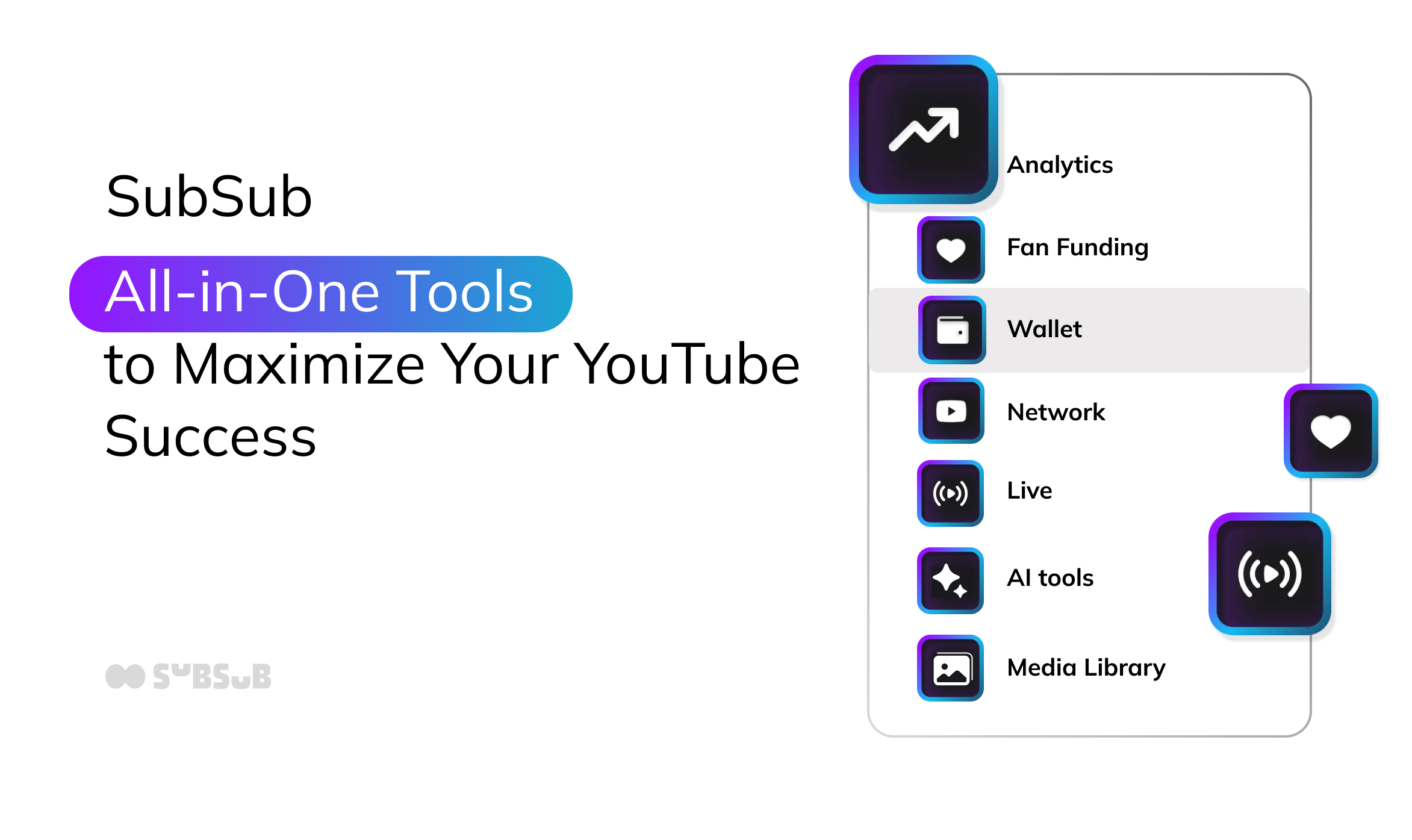
Creating timestamps manually can be time-consuming. SubSub includes a tool that generates them automatically. If you prefer using Claude or another AI assistant, the process is straightforward:
Generate a transcript of your video.
Upload the transcript to your AI tool of choice.
Ask it to organize the content into chapters with timestamps.
Always review the output before publishing.
Each chapter should function as a standalone content block with a clear, descriptive title. These chapter labels can become the entry points that Ask YouTube presents to users when recommending your video as an answer to their query.
4. Metadata in the Ask YouTube Era
Metadata still matters, but its role has changed. Today, it serves primarily as a confirmation of what your content is actually about. The AI analyzes the video itself first and then uses metadata to validate its understanding.
Quick Checklist:
Titles - Use clear, descriptive titles that incorporate relevant search queries. Aim for 60–70 characters to avoid truncation in search results. Avoid excessive CAPS LOCK, clickbait wording, and emoji overload.
Descriptions - The first 2–3 lines are the most important. They're visible before users click "Show More" and are heavily indexed by search. Use this space to summarize the video's value and include your primary target keyword. Below that, add a more detailed description with chapters, resource links, and additional context. In most cases, 200–300 words is more than enough.
Tags - Five to ten relevant tags are usually sufficient.
Hashtags - Use three to five niche-specific hashtags that accurately reflect the topic.
Thumbnails - Click-through rate (CTR) remains one of YouTube's most important performance signals. In Ask YouTube results, your video may appear alongside several competing videos, so your thumbnail must be instantly understandable-even at a small size. If viewers can't immediately grasp what the video is about, they'll click on something else.
An Important Note on Shorts vs. Long-Form Content
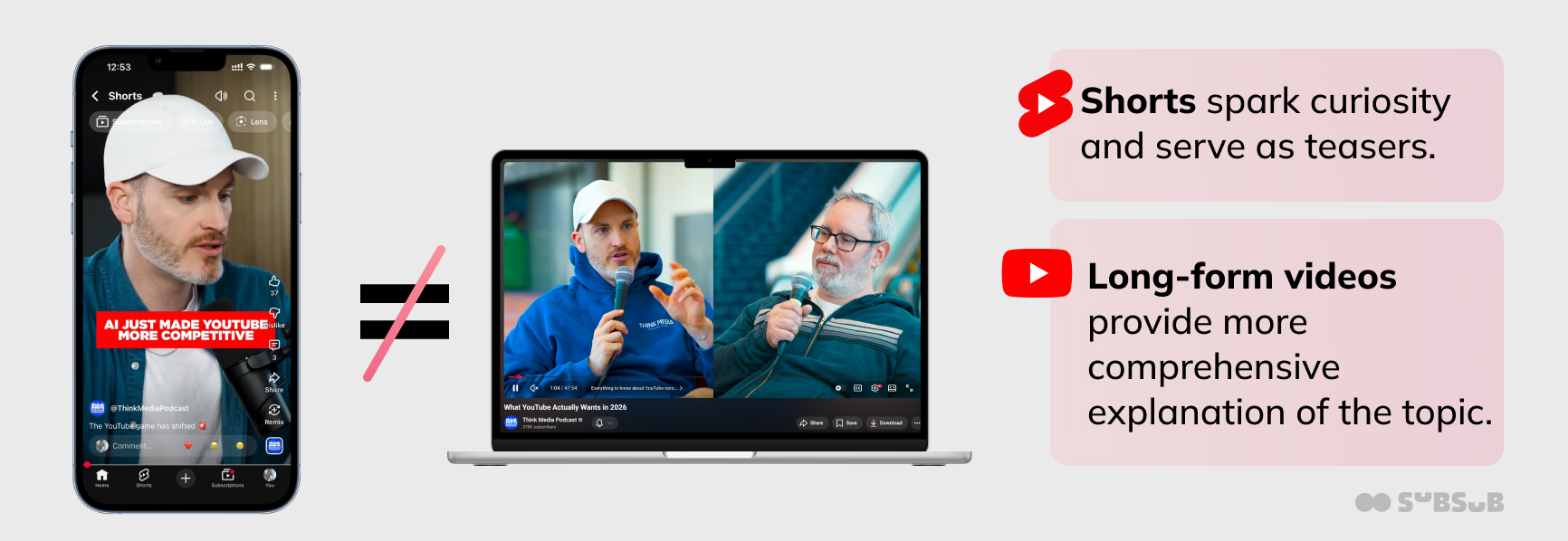
Shorts and long-form videos are fundamentally different formats with different audiences and ranking signals. YouTube uses separate recommendation systems for Shorts and long-form content.
Shorts are distributed primarily through the vertical feed, where content is consumed through swiping. They are ranked based on metrics such as viewed vs. swiped away rate, audience retention, engagement within the first few seconds, and repeat views (loops).
Long-form videos, on the other hand, are distributed through traditional recommendations and search. Their performance is evaluated using signals such as audience retention, watch time, session time, click-through rate (CTR), and viewer satisfaction.
The conversion rate from Shorts viewers to long-form viewers remains extremely low. People who browse Shorts consume content differently-they're looking for quick entertainment, fast answers, or brief moments of interest. Subscribers gained through Shorts are often not interested in watching longer videos, and no "Shorts teaser → full video" strategy has consistently changed that at scale.
In some cases, Shorts can even hurt the performance of long-form content. During a recent YouTube Partner webinar, the team discussed a case where a creator was publishing both Shorts and long-form videos on the same topic. While the Shorts performed well, the long-form videos stopped gaining traction. Analysis using Ask Studio-the AI assistant built into YouTube Studio-revealed that the Shorts were giving away too much information. Viewers received the answer in 40 seconds and saw no reason to watch the 15-minute deep dive.
The takeaway: if you're creating Shorts and long-form videos on the same topic, your Short should create curiosity-not serve as a condensed version of the entire video.
However, Ask YouTube gives Shorts a new role: search visibility. Shorts can now appear in search responses alongside long-form videos, making them valuable discovery assets in their own right.
How should you use this?
If you already have a long-form video on a topic, your Short should spark interest rather than summarize everything.
If you don't have a long-form video, create Shorts that answer specific, narrowly focused questions. For example, a Short titled "3 Mistakes Creators Make with YouTube Titles" can work extremely well as a standalone piece of content that fully answers a search query in under 40 seconds.
The same SEO principles that apply to long-form content (see Sections 1–4 above) also apply to Shorts-just in a much more condensed format. The key difference is speed: in Shorts, you need to grab the viewer's attention immediately. The first two seconds should deliver a strong hook that makes people stop scrolling and keep watching.
Creator Skills That Will Matter in 2026
Learn to Tell Stories
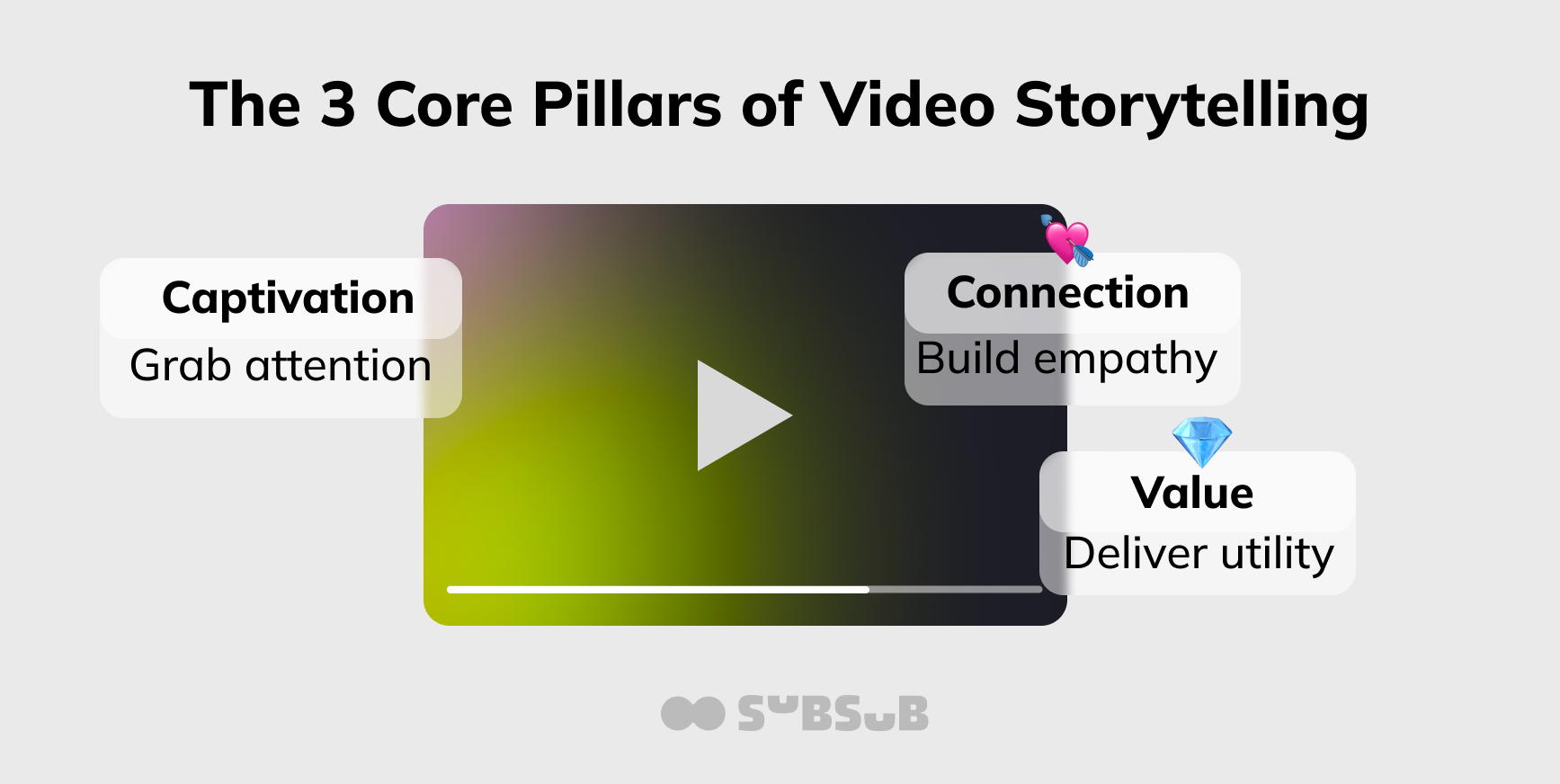
We've already discussed video structure, but great structure is ultimately built on the ability to think clearly, communicate ideas effectively, and guide viewers through a narrative. Read more. Write more. Practice organizing thoughts into compelling stories.
If you've never studied screenwriting, storytelling, or narrative design, now is the perfect time to start. As AI makes content production easier and more accessible, the ability to tell engaging, meaningful stories will become one of the strongest competitive advantages a creator can have.
Treat Optimization as a Skill
SEO isn't a one-time task-it's a habit. Like any skill, it improves through consistent practice and feedback.
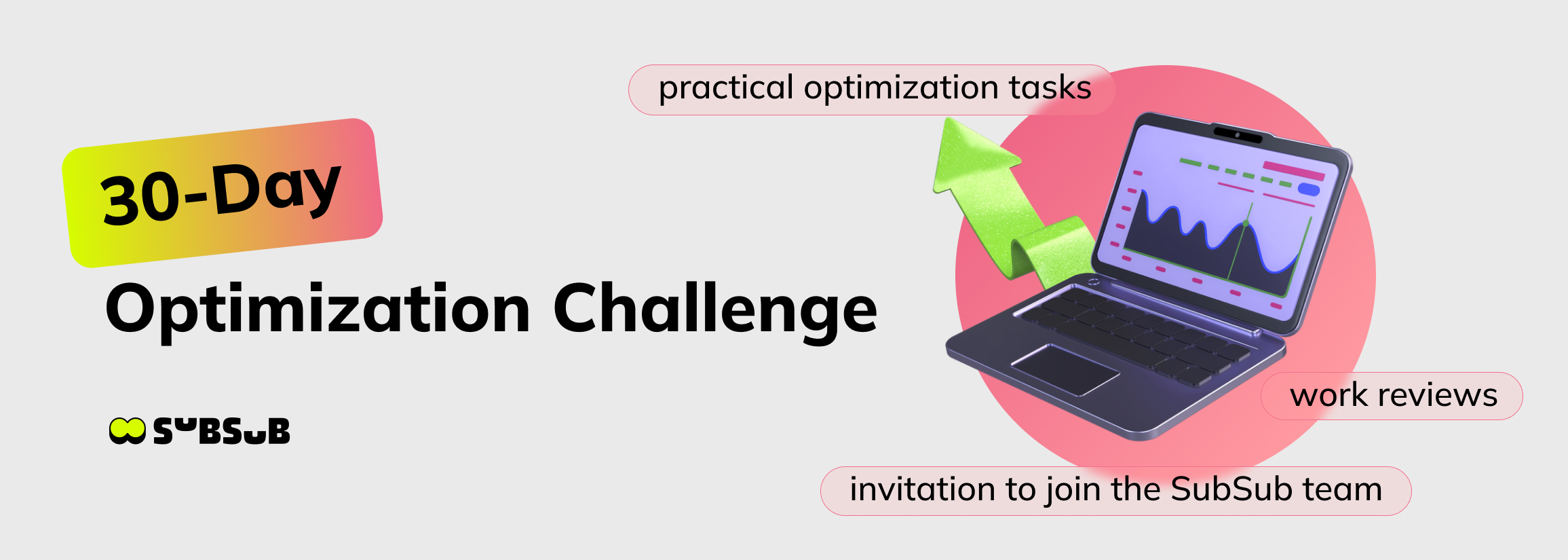
SubSub offers a 30-Day Optimization Challenge designed to help creators build that habit. Each day, you'll receive a practical optimization task, complete it, and submit your work for review. The program costs $100 for the full challenge (roughly $3 per assignment). Top-performing participants may receive an invitation to join the SubSub team.
The key isn't just following trends-it's finding a unique angle on a topic that's already capturing attention. That's where the real opportunity lies.
At SubSub, we've built a tool that matches your channel's niche with emerging search trends and generates video ideas at the intersection of your expertise and current audience demand. Instead of spending hours on manual research, you'll get a curated list of topics people are already searching for-topics that are also highly relevant to your channel and audience.
How can you know whether your viewers are satisfied if you never actually talk to them?
Consider enabling direct monetization - Fan Funding - not just for the revenue, but for the feedback. The money is a bonus. The real value is the connection.
People who are willing to support your work financially are often your most engaged viewers. They'll answer your questions, leave thoughtful comments, and tell you exactly what they need more of. When you understand what your audience wants, you can create content that genuinely serves them. And content that satisfies viewers is exactly the kind of content YouTube's algorithms are increasingly designed to reward.
Create. Analyze. Improve. Then Create Again.
Learn to tell stories that are both engaging and genuinely useful. Think creatively. Stay connected to your audience. Adapt emerging trends to fit your content. Create content like Gods-and join the SubSub creator community.




.jpeg)

.jpg)