Google's AI-powered search results have fundamentally changed how video content surfaces in search queries. When users ask questions, Google's Search Generative Experience now synthesizes answers from multiple sources, including YouTube videos that demonstrate clear relevance and authority. Understanding how to optimize YouTube videos for Google AI search requires a shift in thinking: you are no longer just creating content for human viewers or traditional algorithms, but for sophisticated AI models that interpret meaning, context, and quality signals in entirely new ways. The videos that earn placement in AI-generated summaries share common characteristics: they answer specific questions with clarity, maintain strong structural organization, and provide verifiable expertise. Your optimization strategy must address both the technical requirements that help AI systems understand your content and the quality markers that establish trustworthiness. The following sections break down each component of this optimization process, from the underlying technology to practical implementation steps you can apply immediately.
Google's Search Generative Experience represents a fundamental departure from traditional search results. Rather than simply ranking pages and videos by relevance signals, SGE uses large language models to synthesize comprehensive answers from multiple sources. For video creators, this means your content competes not just for clicks, but for inclusion in AI-generated summaries that appear before traditional results.
The AI evaluates whether your video genuinely answers the user's query with depth and accuracy. Surface-level content that merely touches on a topic rarely earns placement. Videos that provide specific, actionable information aligned with search intent receive preferential treatment in these AI summaries.
How AI Models Process Video Content for Search Snippets
Google's AI does not simply read your title and description. It processes multiple content layers simultaneously: spoken words through automatic transcription, on-screen text through optical character recognition, and visual elements through computer vision models. The system cross-references these signals to understand what your video actually covers, not just what you claim it covers.
This multi-signal approach means inconsistencies between your metadata and actual content can hurt your visibility. A video titled "Complete Guide to Home Brewing" that only covers basic equipment will be recognized as misaligned with its promise. The AI identifies this gap and may deprioritize the content for comprehensive queries.
The Role of Multimodal Embeddings in Video Discovery
Multimodal embeddings allow AI systems to represent video content as mathematical vectors that capture semantic meaning across audio, visual, and textual dimensions. When a user submits a query, the system converts that query into a similar vector and searches for content with the closest semantic match.
This technology enables Google to surface your video for queries you never explicitly targeted in your metadata. If your video thoroughly explains a concept, it may appear for related questions phrased in ways you did not anticipate. The implication is clear: comprehensive, well-explained content naturally earns broader visibility.
Structuring Videos for Semantic Relevance and Clarity
Video structure directly impacts how AI systems parse and understand your content. A rambling, unorganized video confuses both human viewers and machine learning models. Clear segmentation helps AI identify which portions of your video address specific sub-topics, enabling more precise matching to user queries.
Using Video Chapters to Define Information Architecture
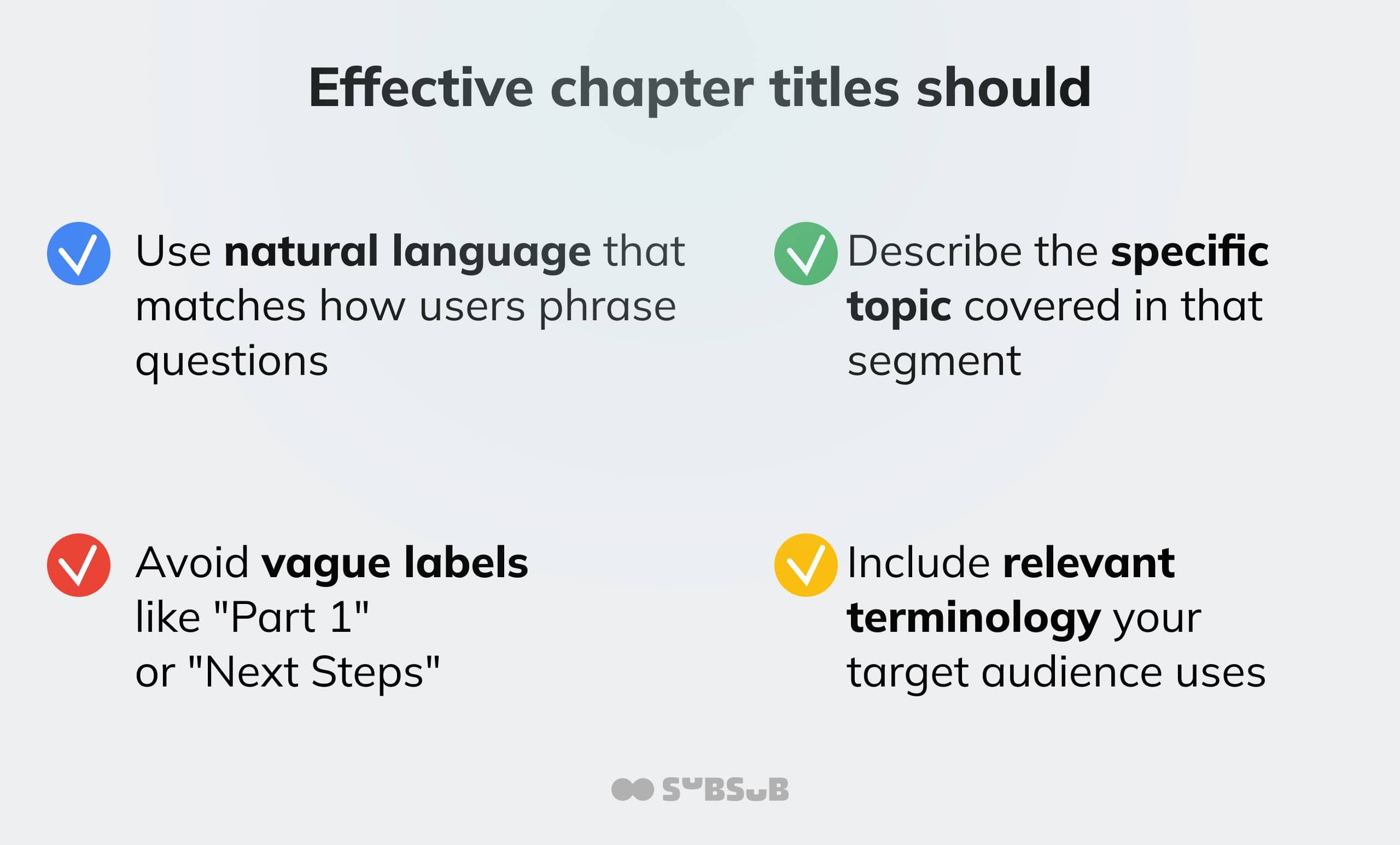
YouTube chapters create explicit markers that tell AI systems exactly where different topics begin and end. When you define chapters with descriptive titles, you provide a content map that helps Google understand your video's scope and organization.
A video about photography basics might use chapters like "Understanding Aperture Settings," "Shutter Speed Fundamentals," and "Balancing ISO for Low Light." These descriptive markers help AI systems match specific video segments to precise user queries.
Optimizing Transcripts for Natural Language Processing (NLP)
Your spoken content serves as primary source material for AI understanding. Automatic transcription captures your words, but accuracy and clarity depend on your delivery. Speaking clearly, using precise terminology, and explicitly stating key concepts improves transcript quality.
Consider scripting critical sections of your videos to ensure you articulate important information accurately. When you verbally summarize key points or restate questions before answering them, you create redundant signals that reinforce your content's relevance to specific queries.
Leveraging Metadata for AI Contextualization
Metadata remains essential for AI optimization, though its role has evolved. Rather than keyword stuffing, effective metadata now provides honest context that helps AI systems categorize and evaluate your content accurately.
Drafting AI-Friendly Titles and Descriptions
Your title should clearly communicate what the video delivers. Specificity outperforms vague promises. "How to Replace a Kitchen Faucet in 30 Minutes" tells both users and AI exactly what to expect, while "Kitchen Plumbing Tips" provides minimal useful information.
Descriptions should expand on your title with additional context, not simply repeat it. Include:
A clear summary of what viewers will learn
Relevant terminology and related concepts
Timestamps for major sections
Links to related resources that establish context
Avoid the temptation to stuff descriptions with keywords. AI systems recognize this tactic and may interpret it as a quality signal in the negative direction.
Implementing Schema Markup for Video Rich Results
Schema markup provides structured data that helps search engines understand your video's content, duration, upload date, and other attributes. While YouTube handles basic video schema automatically, you can enhance visibility by embedding videos on your website with comprehensive VideoObject markup.
Key schema properties include description, duration, uploadDate, thumbnailUrl, and transcript. Including a full transcript in your schema gives AI systems direct access to your spoken content without relying solely on automatic transcription.
Optimizing On-Screen Elements for Visual Recognition
Google's AI analyzes visual content within your videos, not just audio and text. On-screen elements contribute to the system's understanding of your content's quality, professionalism, and relevance.
The Importance of Clear Visual Hierarchy and Text Overlays
Text overlays that highlight key concepts serve dual purposes. They improve viewer comprehension and provide additional signals for AI analysis. When you display important terms, statistics, or steps on screen, you create visual confirmation of your spoken content.
Maintain high contrast between text and backgrounds to ensure readability for both viewers and optical character recognition systems. Consistent typography and placement establish visual patterns that signal professional production quality.
Aligning Thumbnail Imagery with Search Intent
Your thumbnail creates the first visual association between your content and user queries. AI systems analyze thumbnail content and may use it to assess relevance and click-worthiness. Thumbnails should accurately represent your video's content while appealing to your target audience.
Avoid misleading imagery that promises content your video does not deliver. AI systems increasingly recognize this disconnect, and misaligned thumbnails can negatively impact your content's evaluation for AI-powered results.
Building Authority and Trust Signals for AI Recommendations
Google's AI prioritizes content from sources it deems authoritative and trustworthy. Building these signals requires consistent effort across your entire channel, not just individual video optimization.
Establishing E-E-A-T Through Channel Consistency
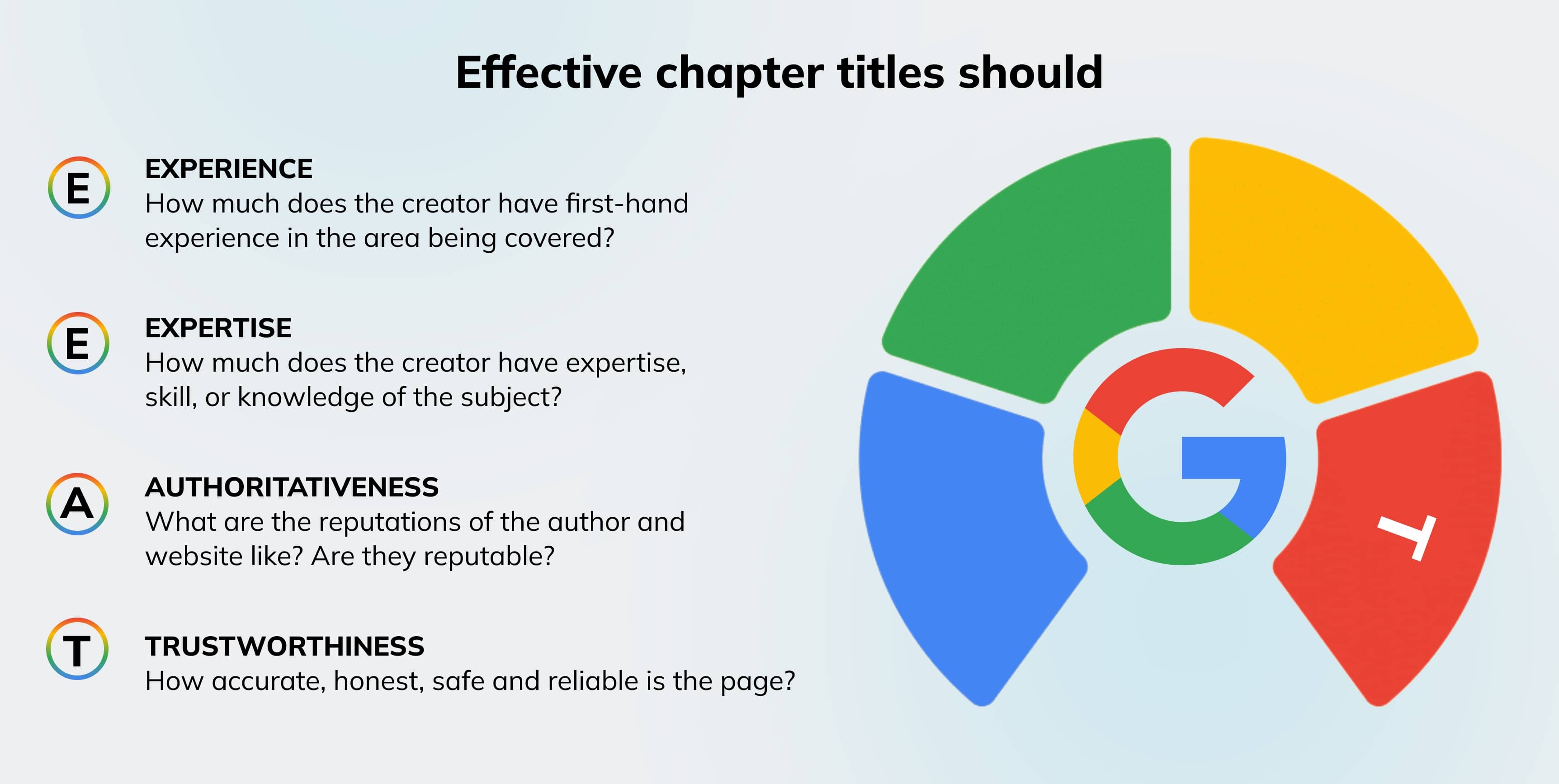
Experience, Expertise, Authoritativeness, and Trustworthiness form the foundation of Google's quality evaluation. For YouTube channels, this translates to demonstrating genuine knowledge through consistent, accurate content within your niche.
Maintain focus within your channel's subject area rather than chasing trending topics outside your expertise. Regular publishing schedules, professional presentation, and accurate information build cumulative authority that benefits all your content. Include credentials and experience indicators in your channel description and video introductions when relevant.
Measuring Success via Google Search Console and YouTube Analytics
Tracking your performance in AI-powered search requires monitoring both traditional metrics and newer indicators. Google Search Console shows which queries drive traffic to pages containing your embedded videos. YouTube Analytics reveals traffic sources, including Google Search, and identifies which videos earn external search visibility.
Pay attention to watch time from search traffic, as this indicates whether your content satisfies the intent behind queries. High bounce rates from search suggest misalignment between your content and user expectations, which can negatively impact future AI recommendations.
Moving Forward with AI-Optimized Video Content
The shift toward AI-powered search rewards creators who prioritize genuine value over optimization tricks. Your videos must actually deliver what they promise, answer questions with depth, and demonstrate real expertise. Technical optimization matters, but it cannot compensate for thin or misleading content.
Focus first on creating comprehensive, well-structured videos that thoroughly address your target topics. Layer in technical optimizations through chapters, metadata, and schema markup. Build channel authority through consistency and accuracy. Monitor your performance and adjust based on what the data reveals about user satisfaction.
The creators who succeed in AI-powered search will be those who recognize that these systems ultimately try to identify the best content for users. Your goal is not to trick the AI, but to create content worthy of its recommendation.




.jpg)