YouTube has announced its biggest monetization changes in a decade. Starting February 1, 2027, the requirements for joining the YouTube Partner Program (YPP) are being updated, the rules for earning from Shorts are changing, and the Premium Lite subscription is rolling out globally.
These updates affect everyone, both channels that are already monetized and those still working toward it. We spoke with the YouTube team to get a clearer picture of the new policies, and we've pulled together everything that matters right now.
There are three key changes to cover: Premium Lite, Shorts revenue, and the Partner Program requirements.
Premium Lite: a new subscription and a growing paid audience
Premium Lite is a new subscription that costs significantly less than standard Premium. It was previously tested in a limited number of regions and is now launching in most countries where Premium is available.
The idea behind Premium Lite is simple: give viewers who mainly want ad-free watching a cheaper option, without making them pay for features they don't use.
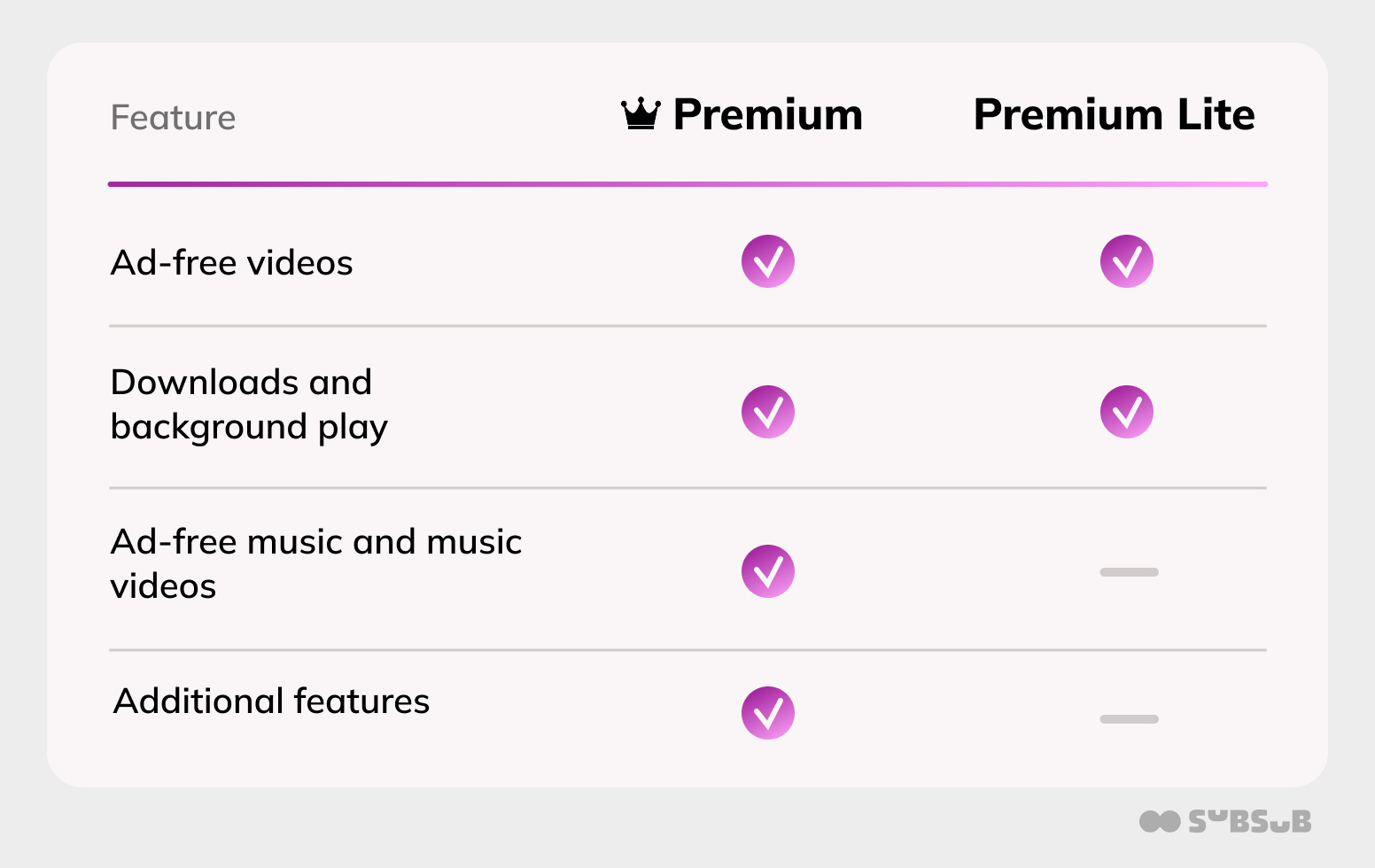
How Premium Lite differs from Premium
Alongside the launch, YouTube shared more detail on exactly how Premium and Premium Lite revenue is calculated. The distribution happens in four stages.
Pooling the revenue. Each month, the platform pools net subscription revenue from Premium and Premium Lite — separately by country and separately by plan type (individual, student, family). This revenue covers music licensing, rights acquisition, and operational costs.
Calculating the total creator payout. From what's left after those costs, a share goes into the creator pool. This is where the key difference between the two subscriptions shows up: for Premium it's 30% of the remainder, for Premium Lite it's 60%. Since Premium Lite doesn't cover music or music videos, music licensing takes a much smaller cut.
Splitting between formats. Both the Premium and Premium Lite pools are then split between Shorts revenue and long-form revenue. For long-form, the split is based on share of watch time; for Shorts, on view count.
Splitting between creators. In the final stage, revenue is distributed across channels based on how many of their viewers are watching with a Premium or Premium Lite subscription. The creator's final share stays the same: 45% for Shorts and 55% for long-form.
The full methodology is available on the platform's blog if you want to go deeper.
According to YouTube's research, creators earn more on average from Premium subscriptions than from ads, per viewer. So this is good news overall. A cheaper subscription widens the pool of paying viewers, and more Premium and Premium Lite subscriptions mean more potential channel revenue.
YouTube Shorts: the 10 million views per 90 days threshold
This is probably the most significant update for creators working with short-form content. The new rule: to receive your share of Shorts revenue each month, your channel needs 10 million valid Shorts views over the last 90 days.
So if your channel is built around Shorts content, that's a number you'll need to hold consistently. Fall below it, and you won't receive Shorts revenue.
There are 2 key details here.
What counts is valid views (engaged views). That's not the same as the total view count shown under your video. The gap can be substantial, so check your position using engaged views in analytics.
Your channel doesn't lose its place in the Partner Program. If you miss the threshold, only Shorts revenue switches off. Long-form videos, live streams, and other revenue sources within the program keep working as usual. You don't need to reapply to YPP: as soon as the channel hits 10 million views in 90 days again, Shorts revenue turns back on automatically.
For channels with consistently strong Shorts numbers, this change will barely register. It'll hit hardest for channels where Shorts is a secondary format, and for channels with uneven view patterns, where growth spurts are followed by long quiet stretches.
The obvious question: is YouTube changing the Shorts rules because something new is coming?
Yes — the platform is working on new earning options specifically for short-form content. There aren't many details yet, but the fact that an update is coming is confirmed in YouTube's Help Center. So the tighter requirements come paired with new monetization tools for the format.
Partner Program: the new entry requirements
Starting February 1, 2027, to join the Partner Program a channel needs to meet these requirements:
1,000 subscribers — unchanged;
8,000 watch hours over 365 days,
OR
20 million valid Shorts views over the last 90 days.
Both core thresholds have effectively doubled: previously it was 4,000 watch hours and 10 million Shorts views.
The new requirements don't apply to channels already in YPP. If your channel is already monetized, it won't be reassessed against the new numbers.
Why YouTube is changing the rules
Partner Program requirements hadn't been updated since 2018. Over those eight years, the pool of creators on the platform has grown several times over, and the tools for making content have changed too — Shorts alone now gets over 200 billion views a day.
Our read on it: by raising the entry bar, YouTube is primarily working to keep a higher share of quality content on the platform. This isn't cause for panic — it's a signal that priorities are shifting, from volume of content toward audience retention and viewers who keep coming back.
The practical takeaway for anyone planning a new project: do it now. The current requirements apply until February 1, 2027, and after that the bar goes up.
Accepting the terms in YouTube Studio by January 31, 2027
All current partners will receive updated terms in YouTube Studio, and they need to be accepted by January 31, 2027. If you don't, your channel's monetization will be discontinued.
Depending on which formats your channel monetizes, up to 3 separate sets of terms may appear in Studio:
watch page monetization terms — ads on long-form videos plus Premium and Premium Lite revenue;
Shorts monetization terms — subscription revenue in the Shorts feed;
commercial products terms — Super Chat, Super Stickers, Super Thanks, channel memberships, Gifts, and other fan funding features.
That last one applies mainly to creators who enabled these features before May 2023 and are still on the previous agreement. If you accepted these terms after 2023, you most likely don't need to update them. How many documents a given channel sees depends on what it monetizes: if Shorts was never enabled, those terms won't appear.
Summary
This update touches nearly every creator, but not in the same way. For some it's a few clicks in Studio; for others it's a reason to rethink their content strategy before February.
At SubSub, we're staying in touch with the YouTube team and will update this article as new details emerge, particularly around the new Shorts monetization tools, which have only been announced so far.
If you still have questions about your own channel, email us at creators@subsub.io. And here's hoping the new terms don't get in the way of making good, useful content.