YouTube Shorts get over 200 billion views every day. So, if you're starting a new channel, the answer might seem obvious: just make short videos, and viewers will come. And they probably will. But the real question is: will they stick around?
Subscribers gained through Shorts often don't watch anything longer than a minute. And a single Shorts view can earn creators several times less than a view on a long-form video. Starting February 1, 2027, making money from Shorts will become even more challenging, as YouTube is doubling the eligibility requirements for new channels and introducing an additional requirement specifically for Shorts revenue.
In this article, we'll look at how the two formats compare, whether Shorts can hurt your long-form views, and how to make both formats work together. We'll also share a practical 90-day growth plan for a brand-new channel.
Shorts vs. Long-Form Videos
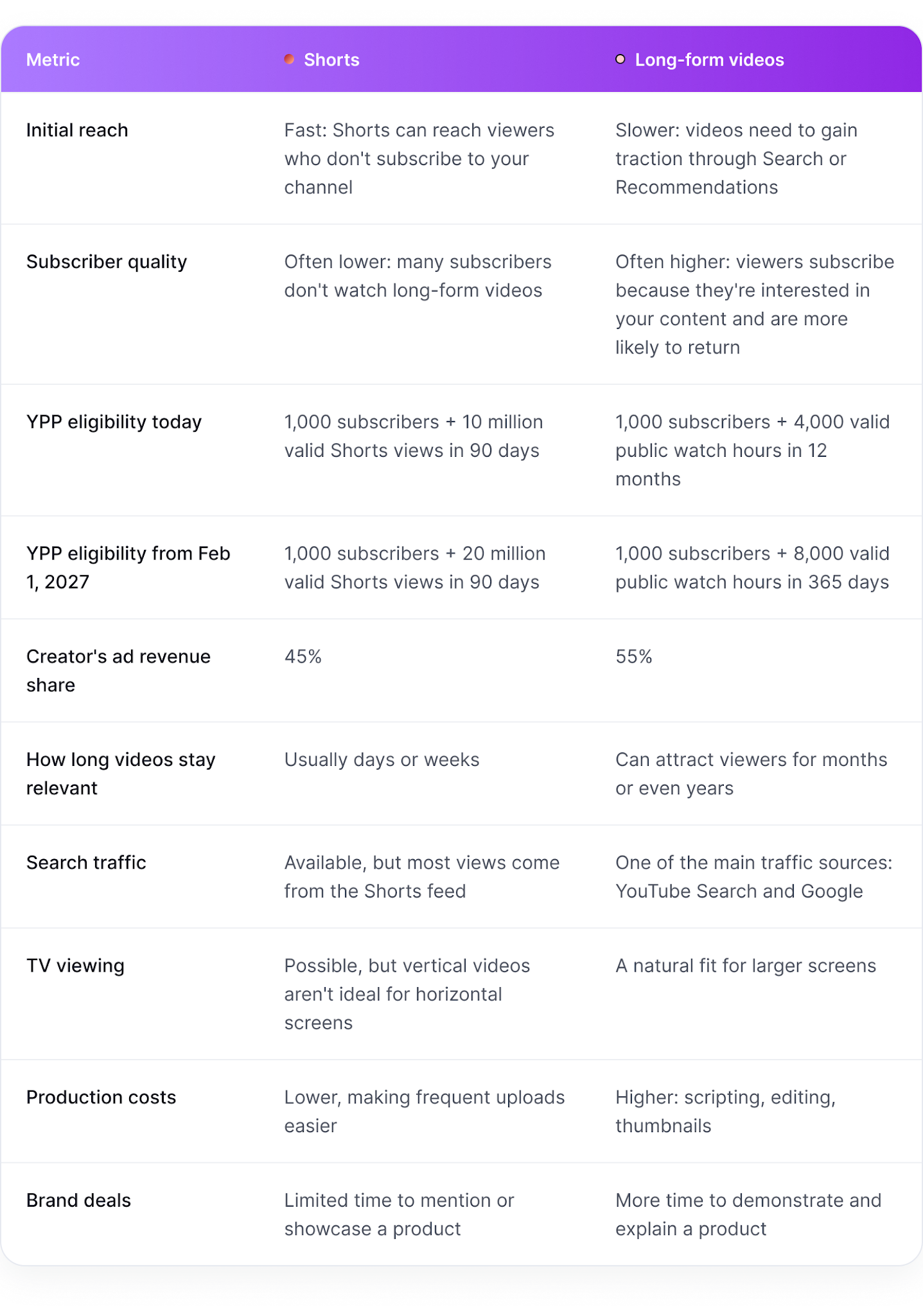
Let's start by comparing the two formats across the most important metrics. Here's a quick overview, followed by a closer look at each point.
It's also worth taking a closer look at the YouTube Partner Program (YPP), as some major changes are coming in 2027.
Starting February 1, 2027, new channels will need 8,000 watch hours or 20 million valid Shorts views to qualify for monetization. Channels already in the program will also face a new requirement. To earn ad revenue from Shorts, they'll need 10 million valid Shorts views in the last 90 days.
What happens if a channel doesn't meet this requirement? It won't be removed from the YPP, and its long-form videos will continue earning revenue. Only Shorts revenue will be paused. In other words, making money from Shorts alone will become much harder for new channels. We've covered all the changes in more detail in our article YouTube Monetization Updates 2027.
But the numbers alone don't explain why one format is better for attracting viewers while the other is often better for making money. So let's look at their advantages separately.
The Benefits of Shorts
Starting from Scratch
When you launch a new channel, you don't have regular viewers, subscribers, or videos that already perform well in Search. That's why getting those first views on a new long-form video can be difficult.
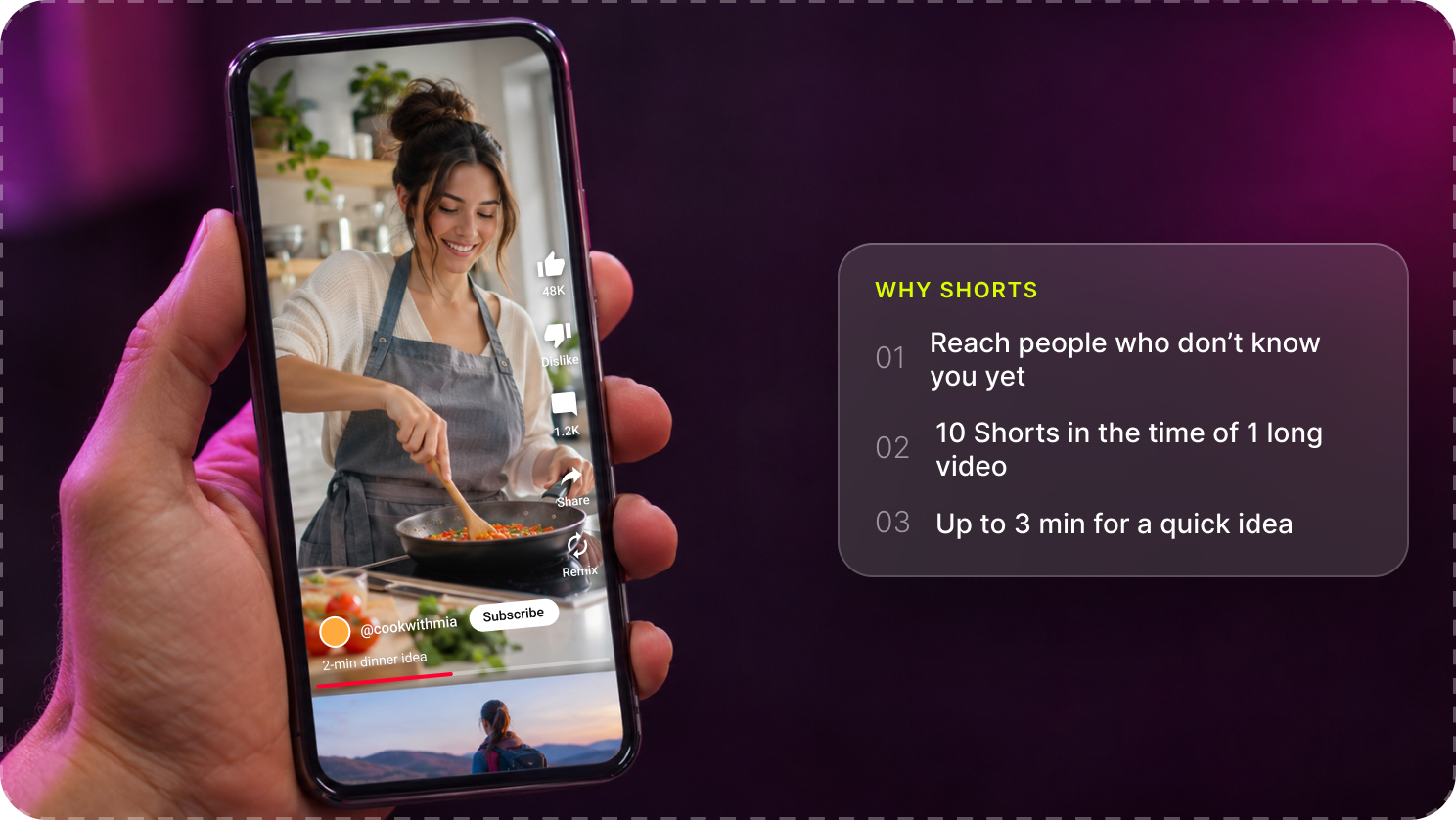
Shorts work a little differently. YouTube can show them in the Shorts feed to people who have never heard of your channel. At first, a video is shown to a small group of viewers. If they choose to watch instead of swiping away, YouTube may expand its reach. People can also subscribe to your channel while watching a Short, even if they've never seen any of your long-form videos.
That's why Shorts are often the first source of audience growth for new channels. You can learn more about how recommendations work in our article How the YouTube Algorithm Works in 2026.
Testing Different Topics Quickly
Another big advantage of Shorts is that you can test different topics without spending too much time or money. For example, you could create around 10 Shorts in the time it takes to produce one high-quality long-form video.
And instead of getting just one result, you'll have several insights: which topics your audience finds interesting, which opening seconds make people keep watching, and which videos bring in the most subscribers.
This is especially useful when you're just starting out and aren't sure what kind of content works best in your niche. You can test several topics with Shorts first, then invest more time in creating full-length videos around the ones that perform best.
Niches Where Short Videos Make Sense
Not every topic needs a 10-15-minute video. In some niches, short-form content is more than enough. Think comedy, life hacks, interesting facts, gaming highlights, or quick recipes.
If you can explain the whole idea in 30-60 seconds, there's no reason to stretch it out. Plus, Shorts can now be up to 3 minutes long, giving creators more room to share quick stories and useful information.
So, Shorts are a great way to get noticed by new viewers and test different topics quickly. But when it comes to building a loyal audience and earning a steady income, long-form videos become much more interesting.
The Benefits of Long-Form Videos
Revenue
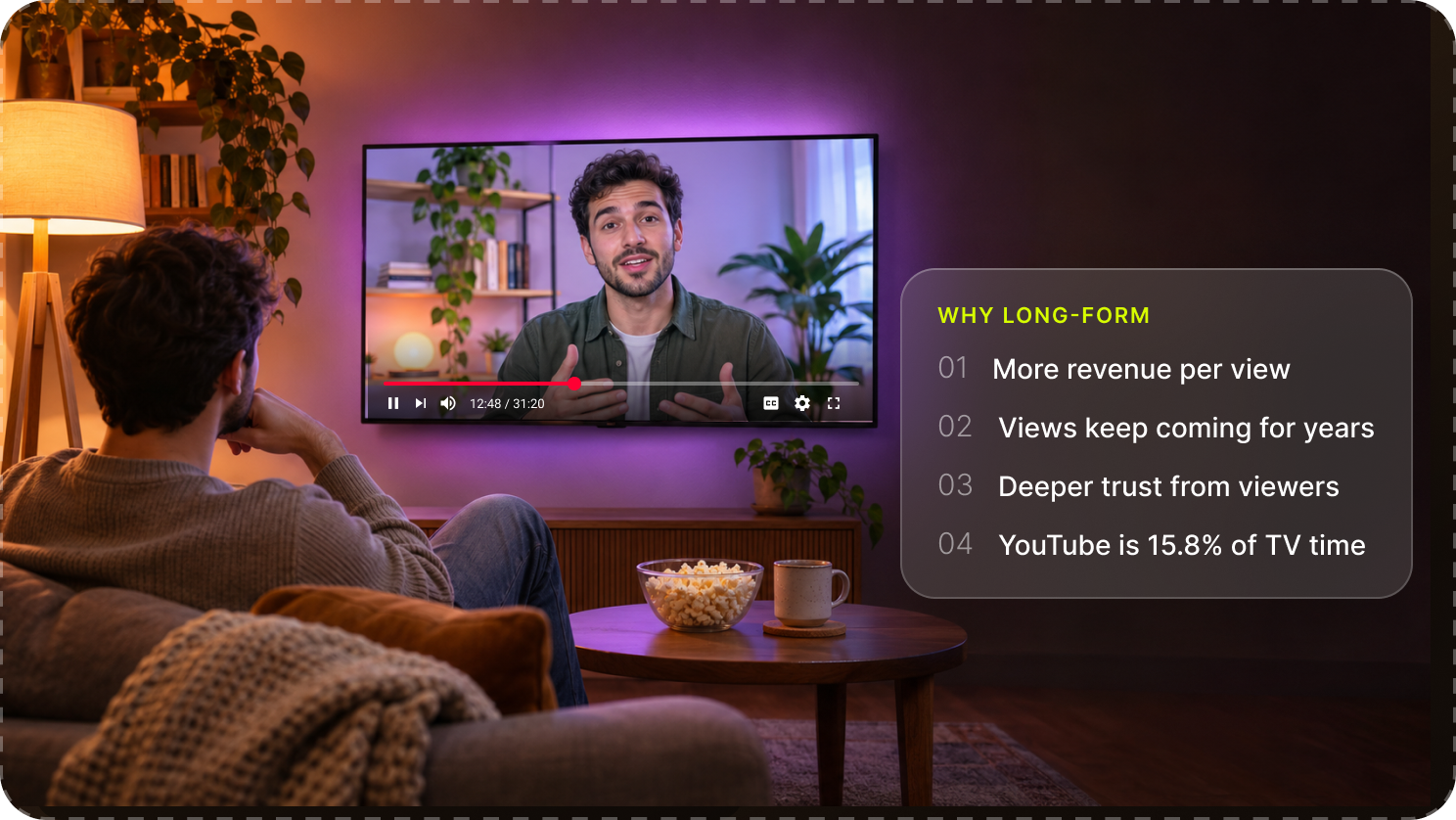
The biggest difference between the 2 formats comes down to how they make money. Long-form videos can earn revenue from ads shown before or after the video. Videos longer than 8 minutes can also have mid-roll ads. Creators receive 55% of the net revenue from these ads.
With Shorts, ads appear between videos in the Shorts feed. YouTube collects the revenue from these ads into a shared pool, takes out the portion used for music licensing, and distributes the remaining amount among creators based on their share of valid views. Creators receive 45% of the amount allocated to them (YouTube Help).
Videos That Keep Working for Years
Revenue isn't just about how much 1 view earns. It's also about how long a video can keep attracting viewers. Shorts usually get most of their views in the first few days after publication. After that, viewers' attention often moves on to newer videos.
Long-form videos, on the other hand, can stay relevant for much longer, especially if they cover topics people keep searching for. Tutorials, reviews, comparisons, and answers to specific questions can continue bringing in viewers from YouTube Search and Google months or even years after they're published.
That means you can create one useful video and keep getting views from it while you're working on new content.
Building Audience Trust
There's a big difference between someone who watches 20 seconds of your video and someone who spends 20 minutes with you.
Long-form videos give you more time to introduce yourself, connect with viewers, and build trust. And that matters when it comes to brand partnerships, donations, channel memberships, and selling your own products. You also have more time to show a product, explain its features, and highlight its benefits.
Watching on TV
Another reason to consider long-form content is the way people watch YouTube today. In 2025, TVs overtook smartphones in the US in terms of time spent watching YouTube. Viewers now watch more than one billion hours of YouTube content on TVs every day.
According to Nielsen, in August 2026, YouTube reached a record 15.8% of all TV viewing time in the US, ahead of Disney at 9.3%. Horizontal long-form videos are simply a more natural fit for a big screen than vertical Shorts. Find out more in our article TVs Have Become the Main Screen for YouTube.
So, long-form videos seem to have the upper hand in almost every category except one: how quickly they can take off. At this point, you might think the obvious solution is to publish both formats. But there's one concern that holds many creators back.
Do Shorts Hurt Long-Form Videos?
You've probably heard that if you publish too many Shorts, YouTube will stop recommending your long-form videos. But that's not how it works. Back in 2022, YouTube representatives explained that the platform considers viewing history for Shorts and long-form videos separately.
In other words, watching Shorts doesn't automatically determine which long-form videos someone will see in their recommendations. However, there's another issue: the type of audience your channel attracts.
What's Going Wrong?
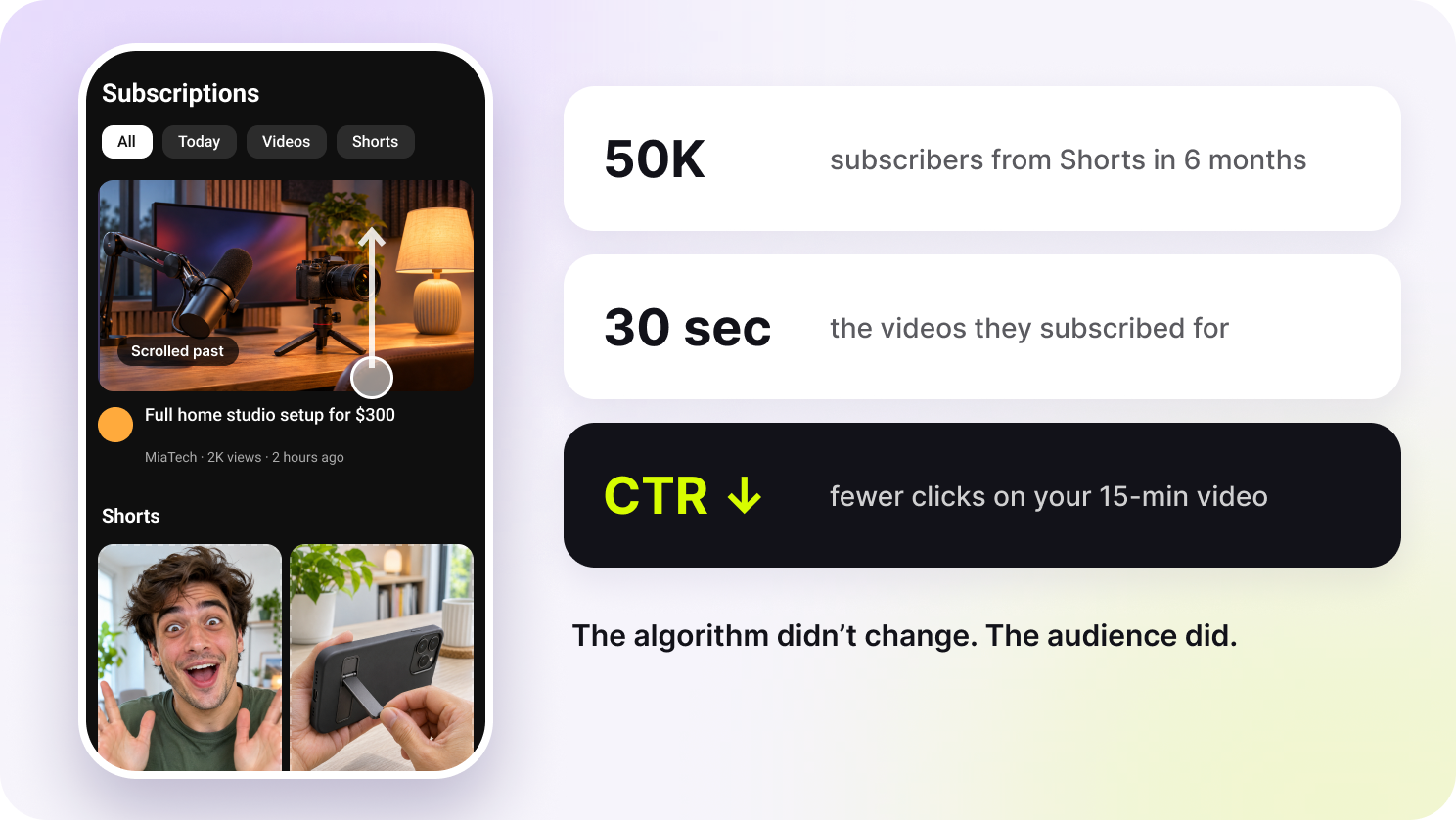
Imagine a channel that gains 50,000 subscribers from Shorts in 6 months. Most of them subscribed after watching 30-second videos and have little interest in watching 15-minute videos.
Now you publish a new long-form video. It appears in their subscription feed, but many subscribers simply scroll past it instead of clicking.
As a result, your CTR and the share of views coming from subscribers may drop. It can look like your channel is losing momentum, even though the algorithm hasn't actually changed anything. You've simply built an audience that prefers a different format.
You can check this in YouTube Studio:
1. Open YouTube Studio - Analytics - Advanced Mode.
2. Select the Subscription status tab and filter the data by content type: long-form videos and Shorts separately.
3. Compare the share of views coming from subscribers for each format. If that share is low for long-form videos and keeps dropping, your audience mix may be the problem.
4. Check the Subscription source tab to see which videos bring in subscribers. If most of them come from Shorts that have little in common with your long-form content, that's something worth fixing.
So, mixing formats is perfectly fine. The real question is how to balance them and where to start. And that depends a lot on your goals and niche.
How to Choose the Right Format for Your Channel
If monetization is your main goal, it's worth estimating how long it might take to reach the requirements with each format.
Calculate Your Path to Monetization
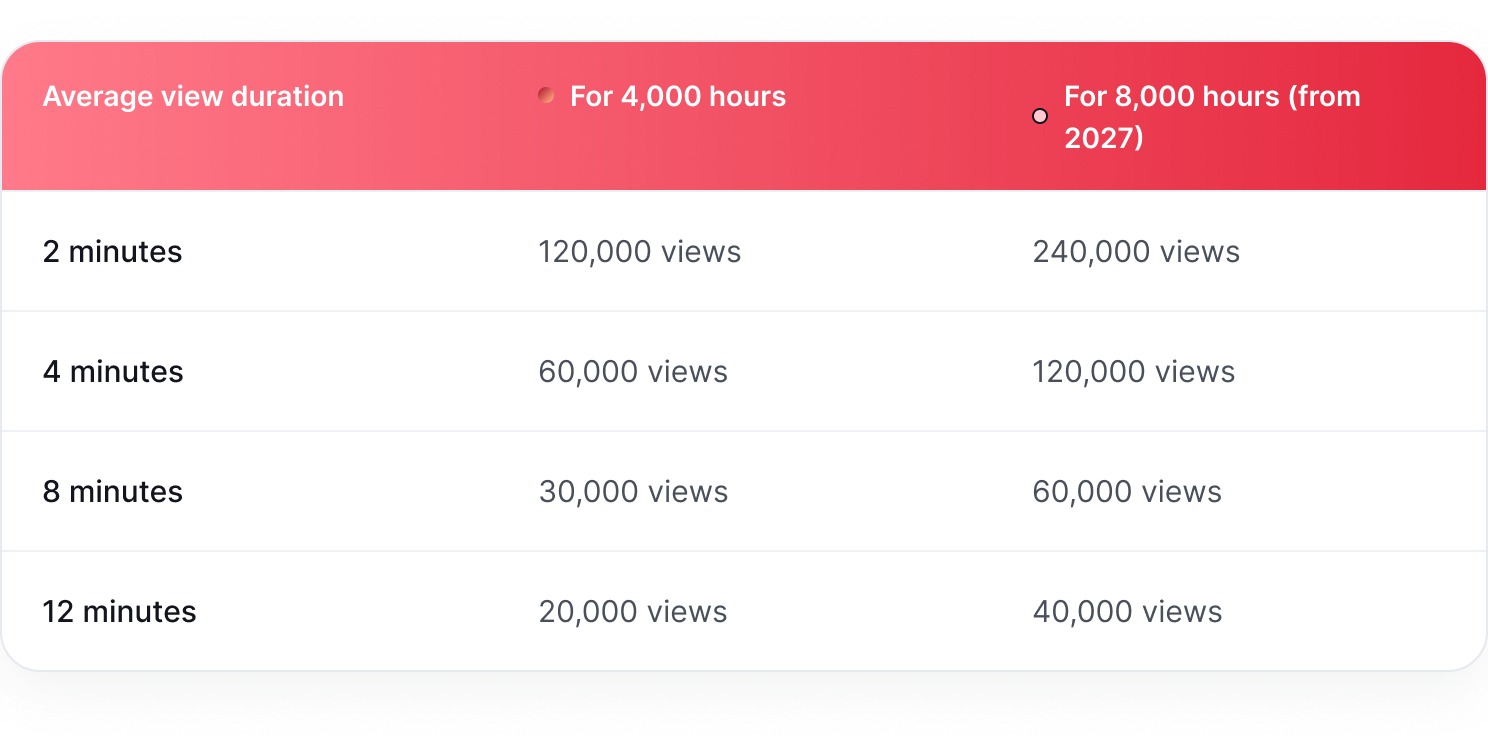
It's easier to understand the YPP watch-hour requirements when you convert them into views. 4,000 hours equals 240,000 minutes. Divide that number by the average view duration of your videos, and you'll get an estimate of how many views you need over 12 months (or less).
Now let's compare that with Shorts. Getting 10 million views in 90 days means averaging more than 111,000 views every day for 3 months. After February 1, 2027, when the requirements increase to 20 million, that number will rise to over 222,000 views per day.
Meanwhile, 30,000 views on long-form videos with an average view duration of 8 minutes can be spread across an entire year. That's around 80 views per day.
For most new channels, the second goal is more realistic, even though Shorts can gain views much faster.
How to Combine Shorts and Long-Form Videos
In most situations we've covered above, the best approach is to use both formats. The idea is simple: Shorts bring in new viewers, while long-form videos keep them interested and generate revenue.
But, as we've already seen, viewers don't automatically move from one format to another. Here are 5 ways to connect the two.
Turn your long-form videos into Shorts. Open your video, click Remix - Edit into a Short, and select a clip of up to 60 seconds. YouTube will automatically link the Short to the original video (YouTube Help).
Add a related video. In YouTube Studio, you can link a video, Short, or livestream from your channel to each Short. Viewers will see it below your channel name and can open it with one tap. Don't expect miracles, but it's one of the easiest ways to guide viewers from a Short to a longer video.
Publish teasers before a premiere. Post 2-3 Shorts a few days before your long-form video goes live to build interest. Once the full video is published, add it as the related video to those Shorts.
Keep your topics connected. If your Shorts are full of memes and jokes while your long-form videos focus on market analysis, the two audiences probably won't overlap. A Short should give viewers a taste of what they can expect from the full video.
Start with 1-3 Shorts for every long-form video per week. Then adjust the ratio based on your analytics, not just your gut feeling.
The first point usually raises the most questions: what exactly should you cut out of a long-form video? Let's look at an example.
Example: 1 Long-Form Video, 2 Shorts
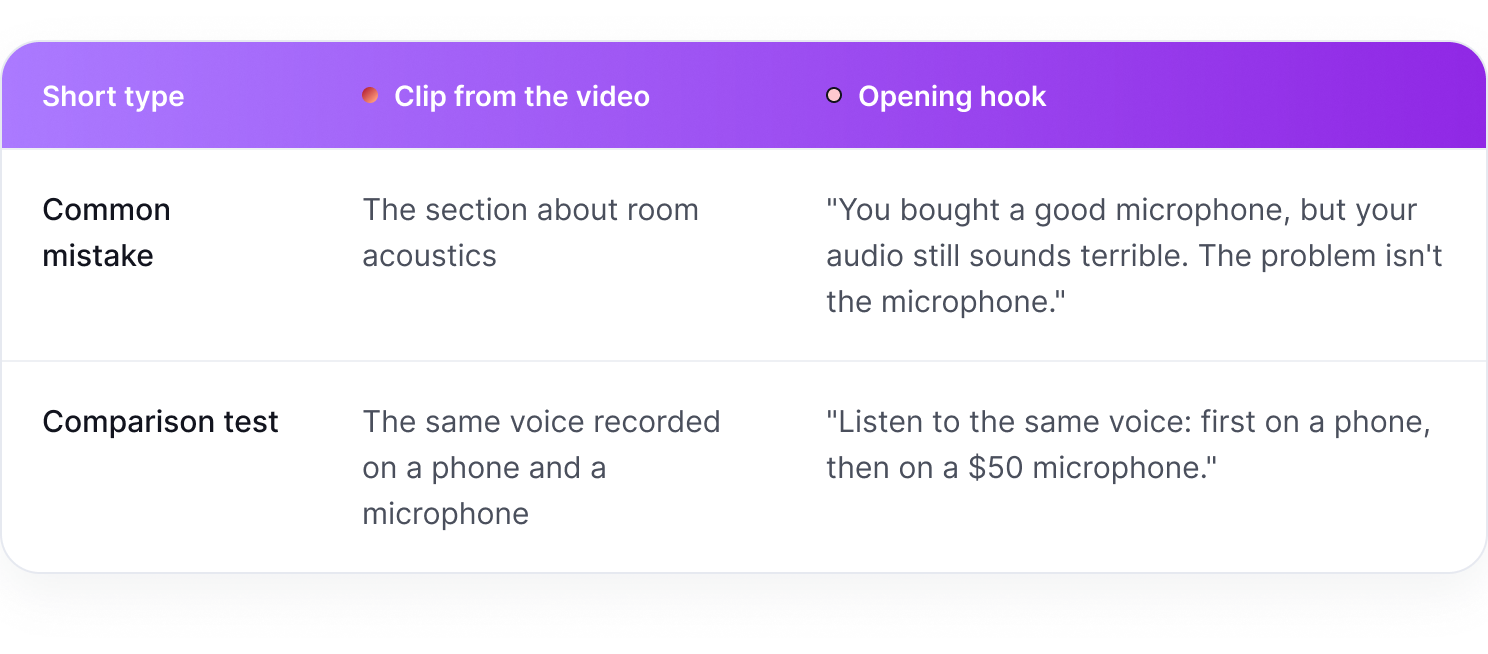
Let's say you've made a 15-minute video called "How to Choose Your First YouTube Microphone Under $100." You can turn it into 2 different Shorts, each with its own hook and a link to the full video:
Each Short answers one small question while leaving the bigger one open: which microphone should you actually buy? Viewers can find the full answer by clicking the related video.
To make sure each clip works as a standalone Short, run it through this checklist.
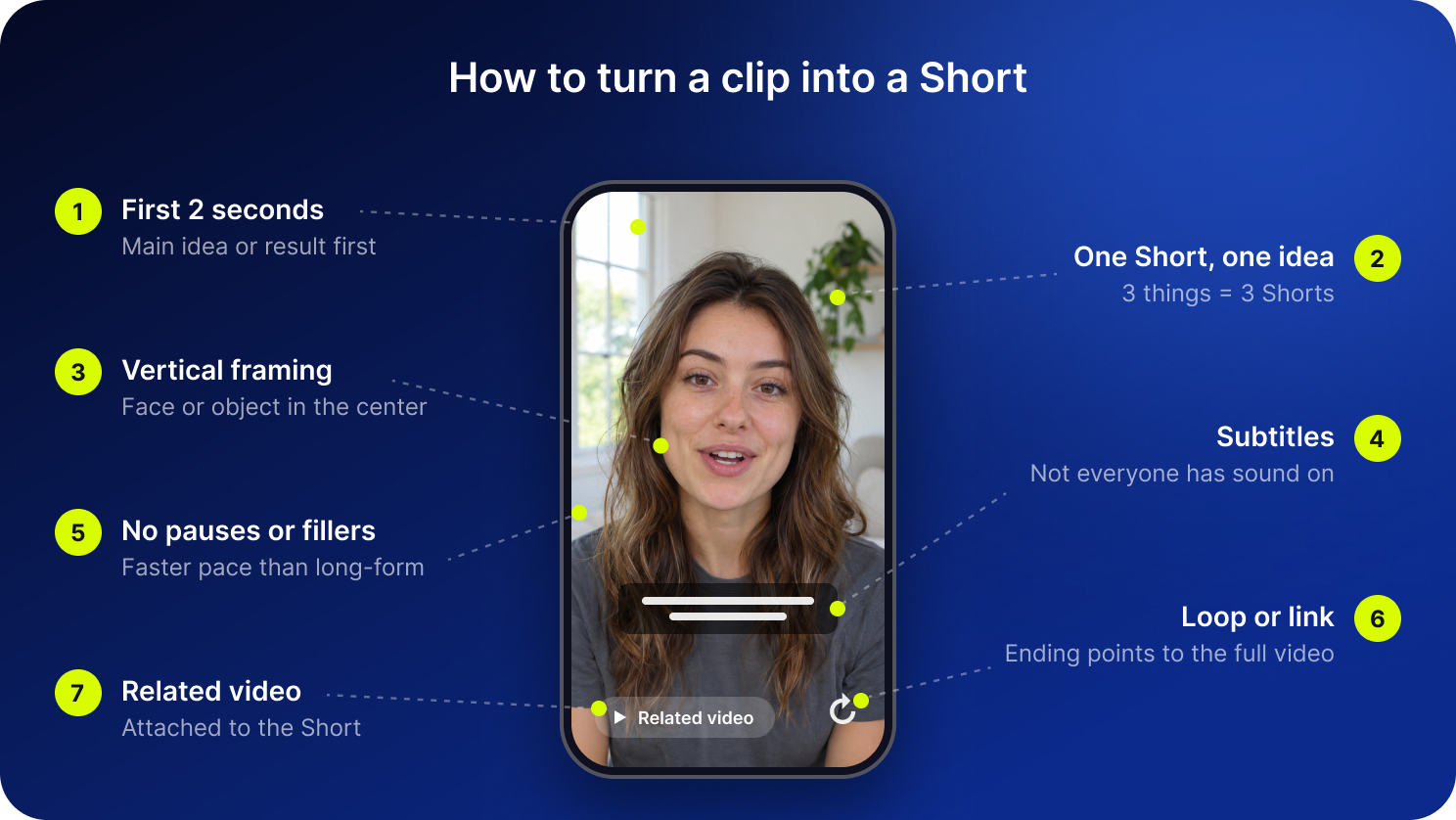
Checklist: How to run a clip into a Short
✓ Get straight to the point in the first 2 seconds. Start with the main idea or result, not "Hey everyone, today we're going to talk about..."
✓ Stick to one idea per Short. If a clip explains 3 different things, turn it into 3 separate Shorts.
✓ Reframe the video for vertical viewing. Keep the face or main object in the center instead of simply cropping the sides of a horizontal video.
✓ Add subtitles. Not everyone watches Shorts with the sound on, and captions help keep viewers engaged.
✓ Cut out pauses, filler words, and repetition. Shorts need a faster pace than long-form videos.
✓ Make the ending loop naturally or point viewers directly to the full video.
✓ Add a related video to your Short.
Now you have the tools. All that's left is to put them together into a plan for your first 3 months.
A 90-Day Plan for a New Channel
Weeks 1-4: Explore and Test
Publish 1-3 Shorts per week, covering 5-10 different topics within your niche. The goal at this stage isn't to gain subscribers. It's to collect data.
Your main metric is Stayed to watch in Shorts Analytics. It shows the percentage of people who chose to watch your Short instead of swiping away.
By the end of the first month, you should have 2-3 topics with the strongest results.
Weeks 5-8: Publish Your First Long-Form Videos
Once you've identified the topics that perform best, start turning them into long-form videos. Aim for one long-form video per week, plus 1-3 Shorts cut from it, each with a related video attached.
You've already tested these topics, so your long-form videos have a better chance of attracting viewers than if you were creating content at random.
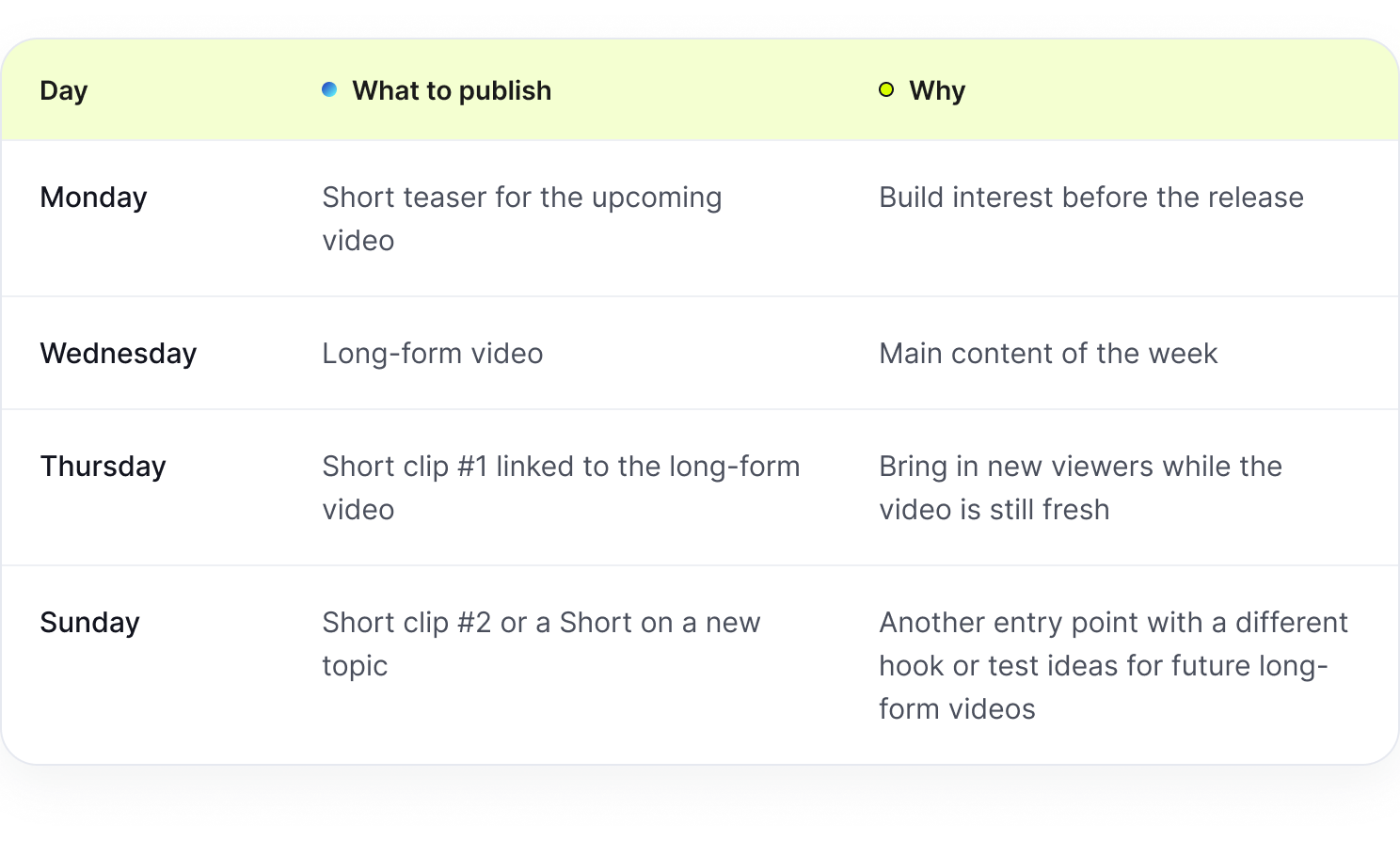
Here's what a typical week could look like:
Weeks 9-12: Analyze and Adjust
After 2 months of publishing both formats, you'll have enough data to start making informed decisions.
Compare the formats by asking 3 questions: Where are your subscribers coming from? What share of your long-form views comes from subscribers? How much revenue does each format generate (if your channel is already monetized), or how many watch hours does it bring in (if it isn't)? Then adjust your content mix based on what actually helps you reach your goal.
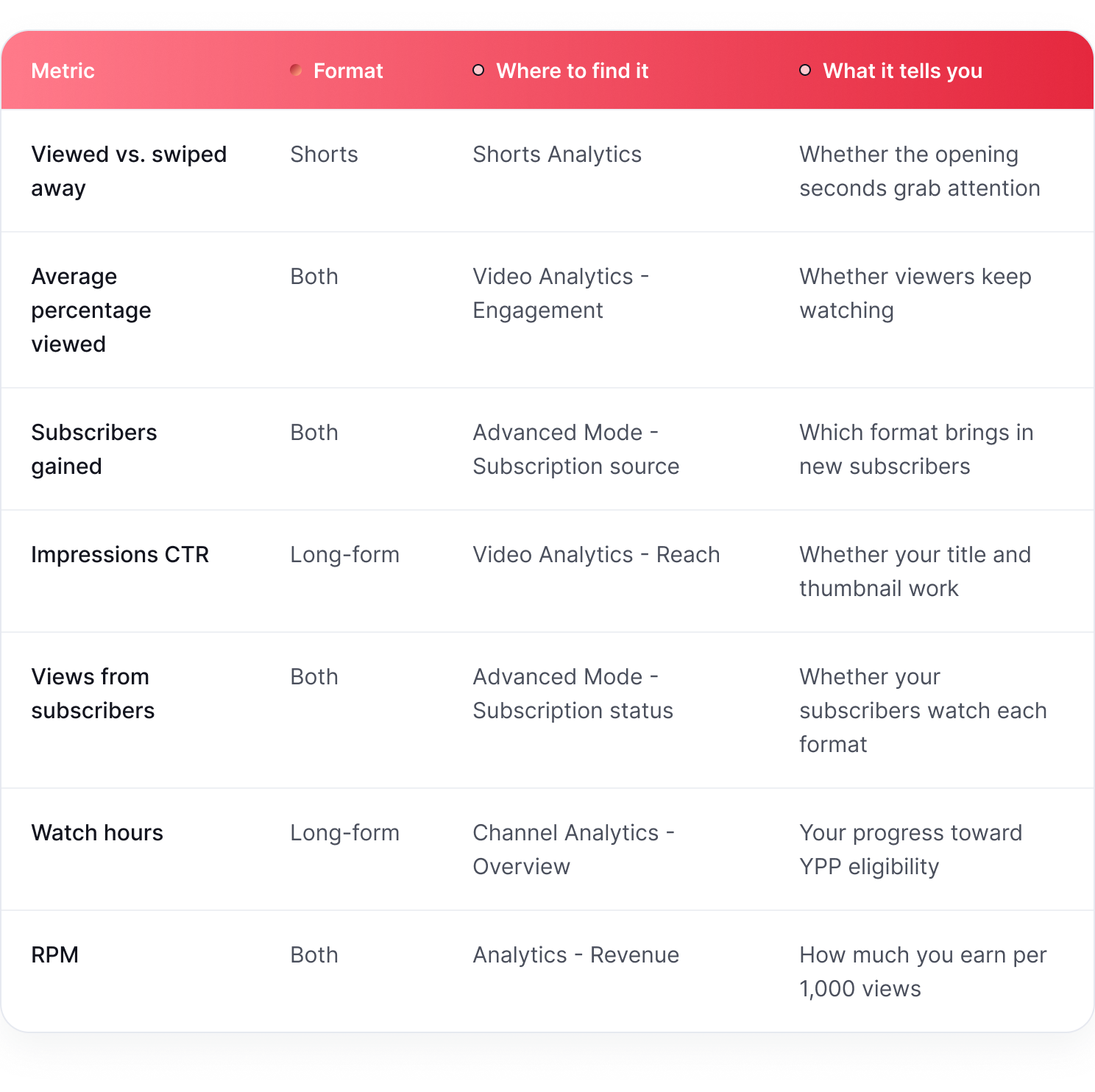
To avoid scrambling for data at the end of week 12, start tracking a few metrics every week from day one.
What to Track Every Week
Even with a plan and the right metrics, it's easy to make the same mistakes as thousands of other creators. Here are some of the most common ones.
5 Common Mistakes
1. Stretching Videos to 8 Minutes Just to Run Ads
You can place mid-roll ads in videos that are longer than 8 minutes. Because of this, some creators try to stretch every video to reach that mark.
But if you can cover the topic properly in 5 minutes, there's no need to add extra information just to make the video longer. Viewers may lose interest and leave before the video ends. It's better to publish a shorter video that people watch all the way through than a longer one filled with unnecessary content.
2. Using the Same Thumbnail and Title Approach for Long-Form Videos as for Shorts
With Shorts, viewers usually scroll through the feed, so the most important thing is to grab their attention in the first few seconds. Long-form videos work differently. People see the thumbnail and title first, then decide whether to click.
Creators who are used to making only Shorts sometimes forget about this and don't spend enough time on their long-form thumbnails and titles. As a result, even a great video can struggle to get views simply because people aren't clicking on it.
3. Making Every Short Follow the Same Template
When a certain format starts getting views, it's tempting to keep repeating it and change only the text. But YouTube may not monetize inauthentic content: videos that are almost identical and look mass-produced without original ideas or input from the creator.
These rules apply to your entire channel, so too many repetitive videos can put your channel's monetization at risk. It's fine to repeat a successful format, but every video should bring something new, whether it's a different story, example, or personal take.
4. Not Disclosing AI-Generated Content
YouTube requires creators to disclose realistic content that's been created or altered using AI. For example, if a real person is shown saying something they never actually said, or an event is shown that never happened. You don't need to add a disclosure for unrealistic content or minor edits.
The AI disclosure itself doesn't affect monetization or video reach. However, repeatedly failing to disclose content when required may lead to video removal or even suspension from the YouTube Partner Program.
5. Comparing Views Without Looking at the Bigger Picture
Since August 24, 2026, YouTube has counted a view from the very first frame across all formats (YouTube Help). But 1 Shorts view may last just a few seconds, while a long-form view can last 10 minutes. Plus, every replay of a Short counts as another view.
Revenue and YPP eligibility depend on engaged views and engaged watch time, so it's better to compare formats based on watch time, subscribers gained, and revenue rather than the view count shown under each video.
Final Thoughts
Shorts and long-form videos don't have to compete with each other. Each format has its own job. Shorts help you reach new viewers and test different topics. Long-form videos turn casual viewers into a loyal audience and bring in most of the revenue.
From 2027, this difference will become even more important as the Shorts monetization threshold increases. For new channels, relying only on short-form content will become a riskier strategy.
The right content mix depends on your niche. One of the easiest ways to figure it out is to look at channels that are already growing in your space. With SubSub Analytics, you can find the top-performing channels in your niche, see how many Shorts and long-form videos they publish, track their latest uploads and trends, and compare their results with your own channel. That way, you can make decisions based on real data instead of guesswork.
FAQ
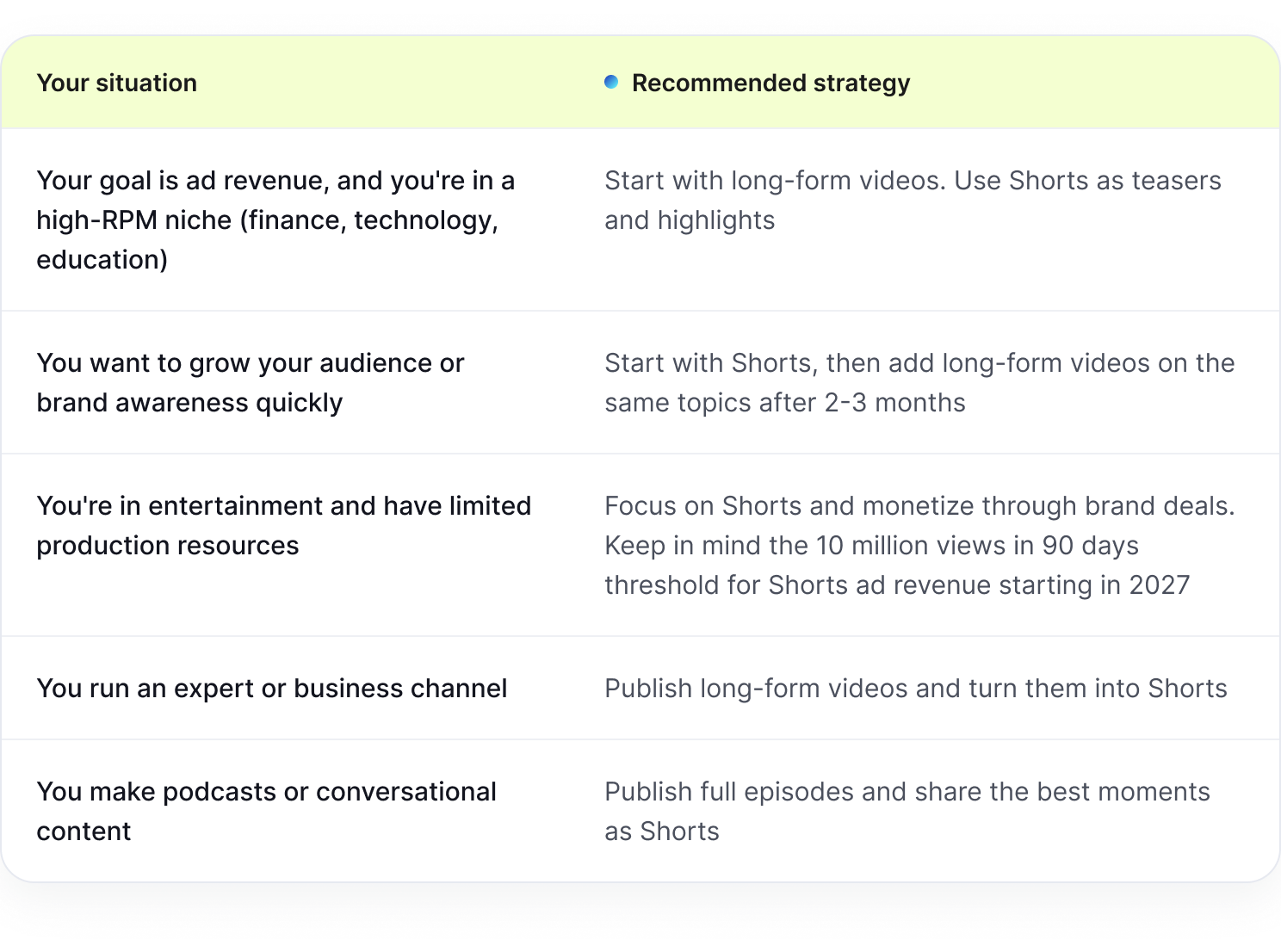
Should a new channel start with Shorts or long-form videos? If your main goal is revenue and you're in a high-RPM niche, start with long-form videos and use Shorts as teasers. If you first want to find out what your audience is interested in, start with Shorts. But make sure to add long-form videos on the same topics within the next 2-3 months.
Do Shorts count toward the watch hours needed for monetization? No. Watch time from Shorts viewed in the Shorts feed doesn't count toward the 4,000-hour requirement (or 8,000 hours for new applications starting February 1, 2027). Shorts have a separate eligibility path: 10 million valid views in 90 days, increasing to 20 million from February 2027.
Can Shorts hurt your channel? They don't directly hurt the long-form recommendation algorithm. YouTube considers viewing history for each format separately. However, Shorts can bring in subscribers who aren't interested in your long-form videos. This may affect how your new long-form uploads perform. The best way to avoid this is to keep your topics connected and link your Shorts to relevant long-form videos.
How much do Shorts pay compared to long-form videos? Creators receive 55% of ad revenue from long-form videos and 45% of their allocated share of the Shorts revenue pool (YouTube Help). RPM depends on both the format and the viewers' location. For example, a kids' Shorts channel with an audience from South Asia had an RPM of 0.06-0.13. Meanwhile, channels publishing long-form videos for a US audience had RPMs ranging from $1.70 to $8.70 (read more about CPM vs. RPM). Starting February 1, 2027, only channels with 10 million or more valid Shorts views in 90 days will receive Shorts ad revenue.
Should you create a separate channel for Shorts? If the topics are the same, probably not. Publishing Shorts on your main channel can help bring subscribers to the place where your long-form videos are. A separate channel makes sense when your Shorts target a completely different audience. Keep in mind that under the new rules, each channel will need to reach the 10 million views threshold on its own to qualify for Shorts ad revenue. Splitting your Shorts between 2 channels could make that goal harder to reach.